
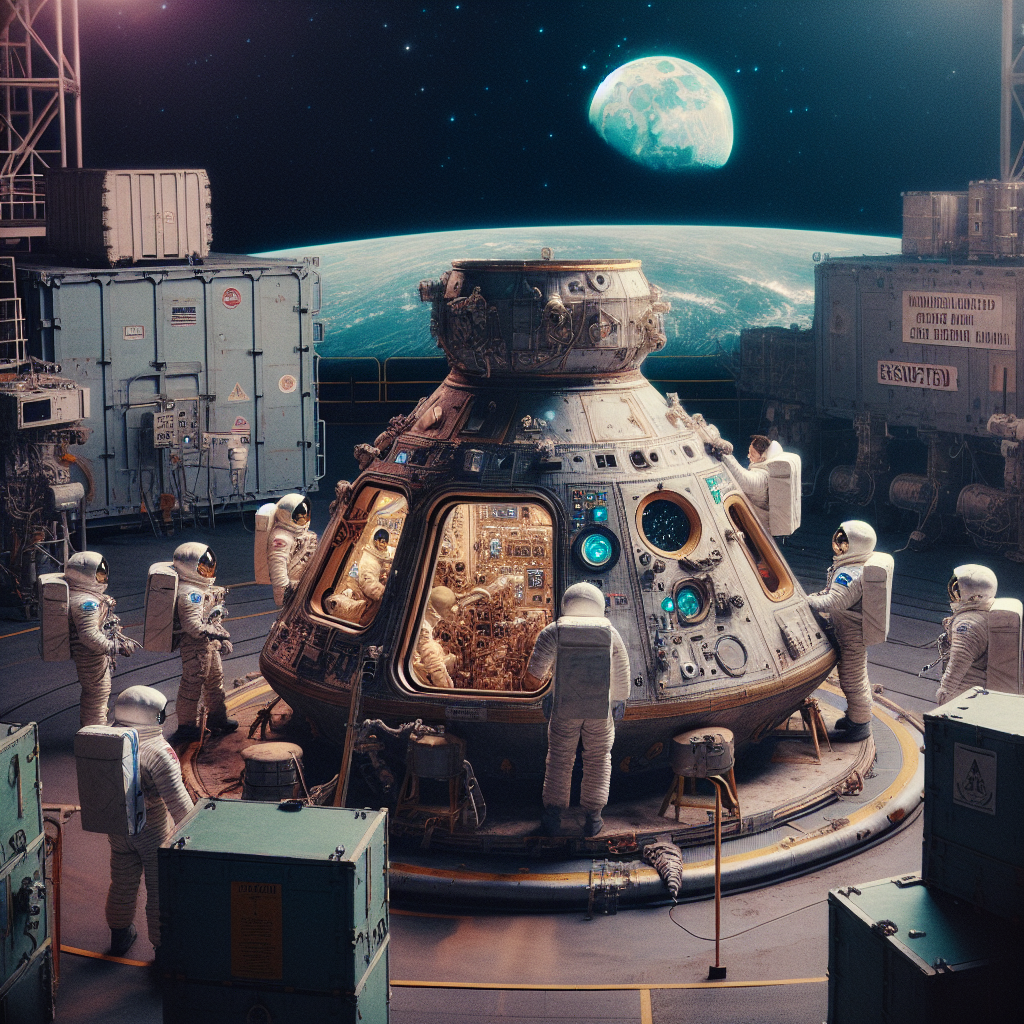
The Artemis II mission, NASA’s first crewed mission to fly around the Moon since the Apollo era, has recently provided unexpected observations from its lunar flyby, marking a significant milestone not only for space exploration but also for the global workforce behind it. Launched under the leadership of NASA's current administration, the mission demonstrates the critical role of an innovative and interdisciplinary aerospace workforce in overcoming complex challenges during deep space operations.
Unforeseen Observations Reflect Workforce Expertise
During the flyby on April 4, 2026, the Artemis II crew reported an “interesting observation” related to unexpected space environment phenomena not previously predicted by mission models. This occurrence has sparked extensive collaborative analysis among scientists, engineers, and mission specialists worldwide.
Such real-time problem-solving underscores the necessity of a dynamic, well-trained aerospace workforce capable of adapting to and managing unanticipated variables in space. It also highlights the increasing integration of multidisciplinary expertise ranging from astrobiology to advanced engineering and data analytics.
Implications for Global Workforce Development in Aerospace
These developments have broad implications for how space agencies, private companies, and educational institutions prepare and support the workforce involved in complex aerospace missions. Several key points stand out:
- Advanced Training & Simulation: Preparation for unexpected in-mission events emphasizes robust training programs and simulation technologies essential for crew readiness and mission success.
- International Collaboration: The Artemis II mission is a hallmark of international cooperation, necessitating workforce coordination across borders, cultures, and disciplines.
- Technological Proficiency: Crew members and support teams increasingly rely on cutting-edge AI, robotics, and remote sensing tools, demanding continuous workforce upskilling.
- Resilience & Adaptability: The capacity to analyze and respond to unforeseen challenges reflects essential workforce qualities in today’s fast-evolving aerospace sector.
Workforce Challenges Ahead
Despite these advancements, the aerospace sector faces ongoing challenges in workforce sustainability and growth:
- Talent Shortage: There is a growing demand for STEM specialists proficient in emerging aerospace technologies.
- Equity & Inclusion: Efforts to diversify the workforce remain critical to fostering innovation and broadening participation in space exploration.
- Continuous Learning: Keeping pace with rapid technological evolution requires continuous education and professional development frameworks.
Future Perspectives for Workforce Integration in Space Missions
The experience of Artemis II serves as a catalyst for reshaping workforce strategies not only within NASA but also globally among allied aerospace industries. Emphasis is shifting from purely technical proficiency to a more holistic approach incorporating critical thinking, collaborative problem-solving, and emotional intelligence.
This paradigm shift aims to prepare the global aerospace workforce for future missions that will involve longer durations, deeper interplanetary travel, and potentially human settlement beyond Earth.
Conclusion
The unexpected discovery during Artemis II’s lunar flyby highlights both the extraordinary capabilities and ongoing challenges faced by today’s space mission workforce. By investing in training, technology, and inclusive practices, the aerospace sector can strengthen its human capital — essential for pioneering the next chapters of space exploration and ensuring sustainable and resilient operations in increasingly complex environments.









No comments yet. Be the first!