
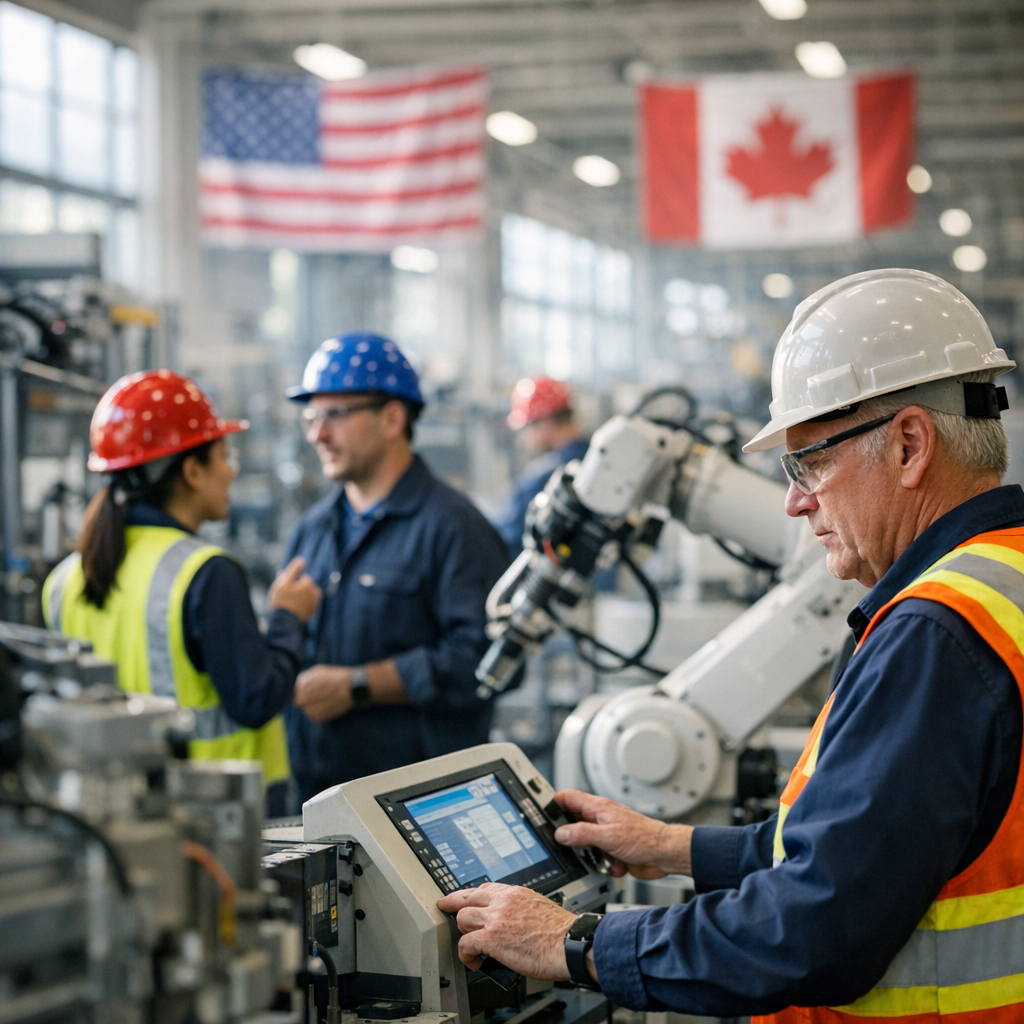
As of October 27, 2026, the persistent trade tensions between the United States and Canada remain a defining element in the evolution of the North American workforce. Though the contentious tariffs and trade disputes originally escalated several years ago, their repercussions continue to influence supply chains, employment patterns, and economic collaboration across both countries.
Historical Context and Continuing Effects
The trade frictions that began during the early 2020s, including imposing tariffs on key sectors such as steel, aluminum, and automobile manufacturing, were initially met with strong resistance in Canadian and U.S. industries. While legislative dialogue and renegotiations have mitigated some immediate impacts, the residual effects on labor markets are persistent.
Workers in sectors dependent on cross-border supply chains, such as manufacturing and logistics, have faced ongoing uncertainty. This has affected job stability, wage growth, and skills development opportunities within the affected industries.
Sector-by-Sector Workforce Implications
- Manufacturing: Tariffs increased production costs, compelling companies to adjust labor needs, automate certain roles, and seek new operational efficiencies.
- Trade and Logistics: Delays in customs and border processing translated to fluctuating workloads and demands for specialized skills in navigating complex regulatory environments.
- Technology and Innovation: Conversely, some sectors leveraged the challenges as a catalyst for innovation, accelerating workforce re-skilling toward advanced manufacturing and digital competencies.
Workforce Adaptation and Policy Responses
To address the evolving landscape, governments and private sectors in both countries have invested in workforce development programs. These focus on:
- Upskilling and reskilling initiatives targeting displaced workers.
- Strengthening cross-border vocational and technical training partnerships.
- Promoting diversification of industry exposure to reduce reliance on vulnerable sectors.
Moreover, strategic dialogues now incorporate workforce implications as a core component of bilateral trade discussions, recognizing that human capital resilience is vital for economic stability.
Future Outlook for North American Labor Markets
Despite the challenges inherited from earlier trade frictions, the North American labor market demonstrates adaptability rooted in collaborative policymaking and innovation-driven workforce strategies. Moving forward:
- Greater integration of digital technologies is anticipated to redefine skill requirements.
- Cross-border initiatives aim to support industries sensitive to trade policies, ensuring a more stable employment environment.
- Investment in workforce mobility and continuous learning is positioned as essential to maintain competitiveness in a globalized economy.
Conclusion
Trade tensions between the United States and Canada, while originating from policy decisions in previous years, have extended their influence well into 2026, significantly affecting the global workforce within North America. Through strategic workforce planning and bilateral cooperation, stakeholders are working toward mitigating adverse effects and fostering resilience. The adaptive capacity of the labor market, coupled with innovation and education, will be instrumental in navigating future economic challenges shaped by trade dynamics.












No comments yet. Be the first!