
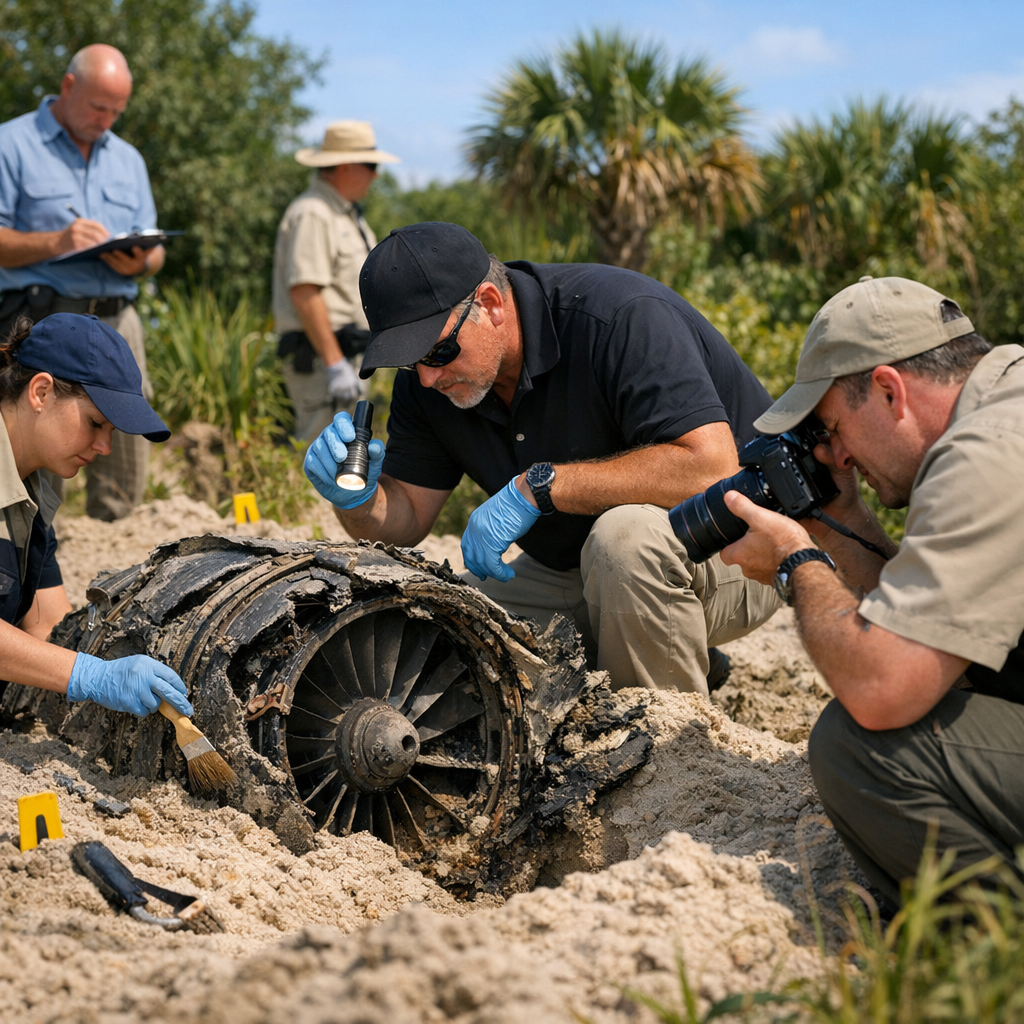
On November 6, 2026, aviation safety investigators made a crucial breakthrough by uncovering an engine piece from a Learjet that crashed in Florida, an accident that has come under intense scrutiny due to prior pilot warnings about severe weather conditions ahead. This development not only aids in piecing together the circumstances of the crash but also highlights pressing workforce challenges within the global aviation sector related to environmental risks and operational safety.
Environmental Hazards and Workforce Safety in Aviation
Weather disruptions have long been recognized as critical risk factors for pilots and aviation crews globally. The Florida Learjet incident sheds light on the increasing volatility of weather patterns and the consequent need for adaptive workforce strategies that safeguard human resources while maintaining operational efficiency. Pilots' electronic warnings signal a growing reliance on advanced meteorological data to navigate these evolving conditions.
For aviation professionals, unpredictable weather underscores the necessity of rigorous training, rapid decision-making capabilities, and a resilient operational framework that prioritizes safety without compromising mission objectives. These components form the backbone of a sustainable workforce capable of managing emergent risks associated with climate variability.
Operational Protocols and Technological Integration
The recovery of engine fragments by investigators offers technical insights that extend beyond the mechanical failure. It highlights how human factors intersect with technology in crisis scenarios. The aviation workforce is increasingly engaged in a technologically mediated environment where real-time communication, data analytics, and predictive modeling inform critical decisions.
Organizations must focus on enhancing workforce competencies in these advanced systems while simultaneously refining incident response procedures. Additionally, unlocking lessons from accident site analysis assists in updating training curricula and strengthening regulatory frameworks to better equip aviation personnel.
Broader Implications for the Global Workforce
The Floridian accident serves as a microcosm of wider challenges facing global workforces, particularly in industries intertwined with environmental unpredictability. Key insights include:
- Resilience Building: Developing workforce resilience through continuous education on environmental risk management.
- Risk Communication: Establishing clear, effective channels for hazard notification and collaborative decision-making.
- Technological Adaptation: Integrating emerging technologies for enhanced situational awareness and operational safety.
- Regulatory Evolution: Updating occupational health and safety standards to reflect contemporary climate challenges.
These factors are critical for maintaining productivity and safeguarding workers’ well-being in volatile conditions.
Conclusion
The investigation into the Florida Learjet crash and the retrieval of key engine components underscore the profound intersection of human expertise, technological advancement, and environmental challenges within the aviation sector. For the global workforce, especially in safety-critical industries like aviation, this incident reaffirms the imperative to foster adaptive, well-prepared professionals capable of navigating the complexities of an unpredictable natural environment. Prioritizing workforce safety and integrating advanced technologies are essential steps toward resilient operations amid growing climate-related uncertainties.












No comments yet. Be the first!