
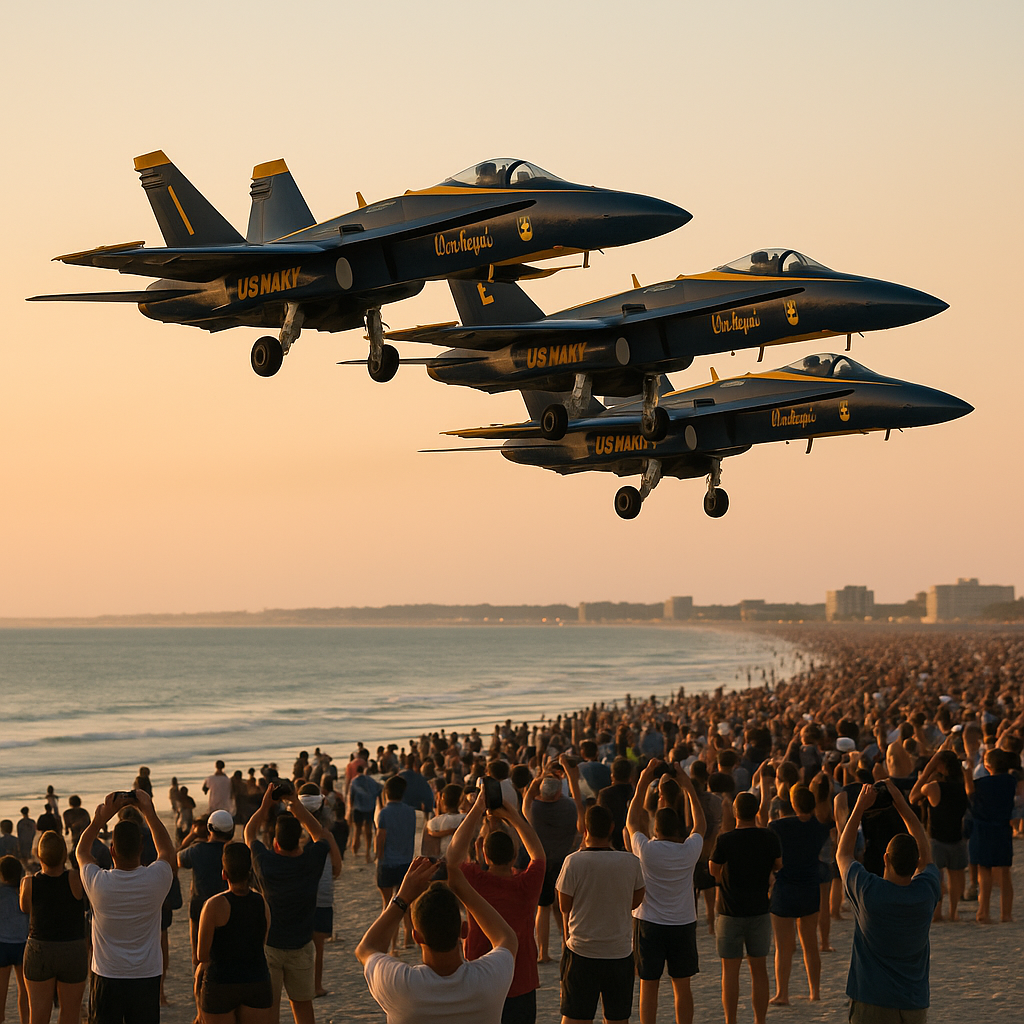
On July 16, 2026, the U.S. Navy Blue Angels executed a notably low-altitude flyover close to beachgoers along the eastern seaboard, reigniting discussions about operational risks and workforce accountability within elite military aviation units. The Navy swiftly addressed public concerns, emphasizing that no disciplinary actions were taken against the pilots involved.
Operational Excellence and Workforce Pressures
The Blue Angels, representing one of the most skilled aviation teams globally, operate under rigorous performance expectations. This incident offers a lens into the critical balance between precision flying and public safety, which directly impacts the workforce's training protocols and decision-making processes.
The absence of formal reprimands or firings highlights the Navy’s approach to managing risk and workforce morale. Maintaining high performance standards while fostering resilience and trust is pivotal for these teams operating in dynamic, high-pressure environments.
Implications for Talent Retention and Training
Such high-profile operations underscore challenges in:
- Enhancing pilot situational awareness and risk management skills through continuous training.
- Balancing operational daring with strict adherence to safety protocols to protect both the workforce and the public.
- Developing leadership frameworks that empower decision-making without fear of disproportionate punitive measures.
These factors are integral to retaining top talent within military aviation and ensuring the sustainability of elite demonstration teams like the Blue Angels.
Workforce Culture and Public Expectations
The event has renewed public scrutiny over military demonstration teams, placing workforce culture in focus. Recognizing the human element behind these highly visible displays points to the need for transparent communication and adaptive workforce policies that align operational imperatives with public safety and perception.
Conclusion
The Blue Angels’ recent low pass serves as a case study of the complexities faced by workforce managers in elite military units. Balancing operational excellence, workforce morale, and public safety remains a nuanced challenge requiring ongoing strategic attention in training, leadership, and policy development.













No comments yet. Be the first!