
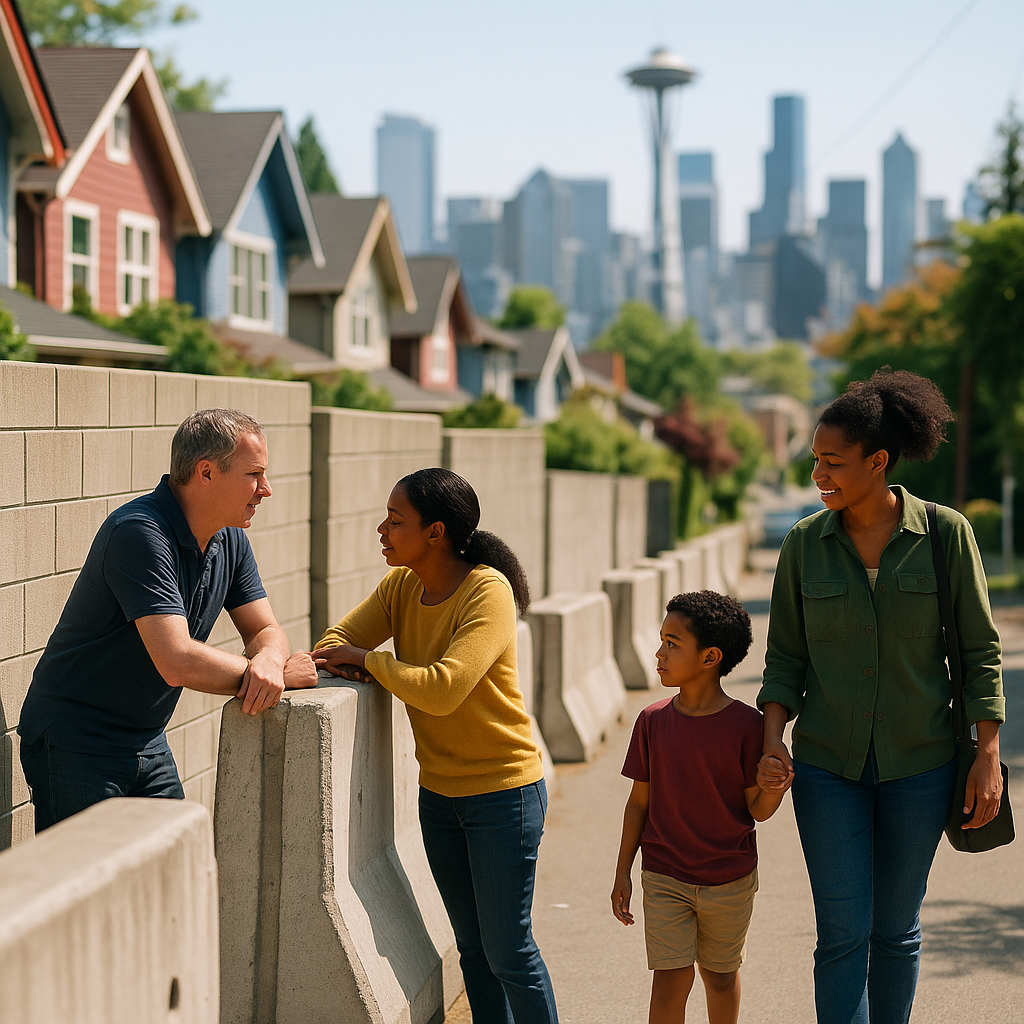
The city of Seattle has recently witnessed a surge in public safety concerns that have prompted residents to take independent security measures. These responses, including the construction of physical barriers around private properties, highlight complex implications for urban workforce environments, from employee retention to labor market perceptions.
Resident-Led Security Initiatives
In the face of what many perceive as insufficient municipal crime control, citizens have started installing walls and other deterrents to increase their personal and property safety. While these efforts stem from immediate safety apprehensions, their socio-economic consequences ripple across local workforce dynamics.
The physical modifications to residential areas symbolize a significant shift in the relationship between community members and their urban environment, influencing not only daily life but also the broader economic landscape.
Impact on Workforce Stability and Attraction
These developments bear direct and indirect effects on the local labor market. Employers in Seattle face new challenges in:
- Retaining employees who prioritize secure and stable living conditions.
- Attracting talent from other regions where safety perceptions are more favorable.
- Maintaining productivity amid heightened community tensions and logistical complications associated with security modifications.
Companies must now adapt human resources strategies to align with evolving employee expectations related to safety and community wellbeing.
Broader Socioeconomic Considerations
The proliferation of self-initiated safety measures among residents signals deeper structural issues that influence workforce engagement rates and economic vitality. Potential investors and skilled professionals increasingly assess urban safety indicators when making relocation or investment decisions.
Enhancing workforce resilience consequently requires collaborative efforts between local governments, businesses, and communities to address security comprehensively while promoting inclusive, equitable economic growth.
Future Outlook in Urban Workforce Management
Moving forward, metropolitan areas like Seattle may witness a realignment in workforce strategies to:
- Integrate safety and wellbeing into employee value propositions.
- Facilitate partnerships with local authorities to improve neighborhood security conditions.
- Use data-driven approaches to monitor the impact of community safety dynamics on workforce trends.
These actions can help sustain a vibrant, secure, and productive workforce essential to urban economic health.
Conclusion
The recent rise in resident-led security measures within Seattle underlines the critical nexus between urban safety perceptions and workforce dynamics. Employers, policymakers, and community leaders must collaboratively foster environments that ensure safety and economic opportunity coexist, thereby preserving metropolitan vitality.










No comments yet. Be the first!