
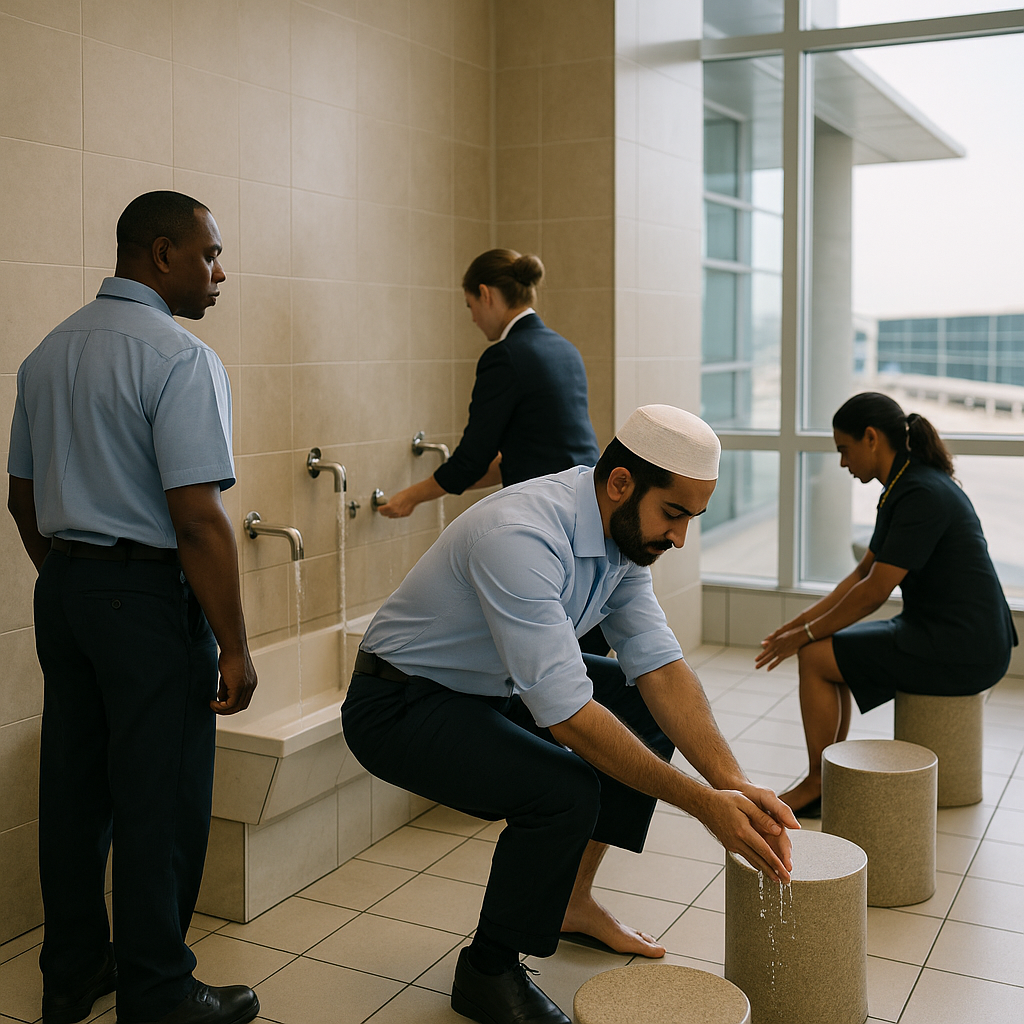
Dallas Fort Worth International Airport (DFW) has recently become one of the leading transportation hubs in North America to integrate Muslim ablution (wudu) stations within its terminal bathrooms. This development, announced on August 13, 2026, represents a broader movement to enhance inclusivity and cultural accommodation within the global workforce infrastructure and public service environments.
Contextualizing the Initiative within Global Workforce Diversity
The addition of ablution stations addresses the practical needs of Muslim employees and travelers who require designated areas for ritual purification, an essential part of daily religious practice. By providing such facilities, DFW Airport not only improves the experience for a significant portion of its global workforce but also signals a progressive approach to cultural accommodation in public spaces.
Increasingly, modern workplaces and service environments prioritize cultural competence and sensitivity. Enabling religious expression through dedicated infrastructure can contribute to a more engaged and comfortable workforce, potentially boosting morale and productivity among diverse employee populations.
Operational and Workforce Implications
This move impacts various stakeholders directly linked to the workforce operations of major international airports:
- Employee Satisfaction and Retention: Workers from diverse backgrounds may find enhanced workplace inclusivity a compelling factor to remain loyal and motivated.
- Traveler Experience Enhancement: Airlines and airport personnel benefit from smoother passenger flows when cultural needs are preemptively met, reducing stress points in customer service.
- Training and Awareness: Accompanying the installation, airports often implement training programs emphasizing cultural awareness among staff, fostering a respectful and knowledgeable workforce.
Broader Trends in Workplace Cultural Accommodation
The initiative at DFW reflects a growing global trend where organizations are integrating culturally responsive facilities and policies. Recognizing diverse religious and cultural practices through infrastructure adaptation forms part of a comprehensive diversity, equity, and inclusion (DEI) strategy embraced by leading global entities.
Globally, companies and institutions are identifying that such accommodations significantly contribute to:
- Reducing workplace or service environment friction
- Enhancing cross-cultural communications
- Attracting skilled employees from diverse demographic sectors
- Fulfilling international compliance or social responsibility commitments
Challenges and Considerations
While the installation of ablution stations is a step forward, robust implementation requires ongoing management, including:
- Maintenance and hygiene standards to ensure usability and comfort
- Clear signage and accessibility to effectively serve the Muslim workforce and visitors
- Engagement with community and employee representatives to validate needs and best practices
Airports like DFW potentially serve as models for other large employers and transportation hubs aiming to foster inclusive work environments that reflect the multicultural realities of today's globalized world.
Conclusion
The installation of Muslim ablution stations at Dallas Fort Worth Airport exemplifies how infrastructure adjustments contribute meaningfully to creating inclusive, culturally aware workforce environments in global transit hubs. By addressing diverse employee and visitor needs, organizations can cultivate harmony and operational efficiency, ultimately strengthening their competitiveness in an interconnected global economy.









No comments yet. Be the first!