
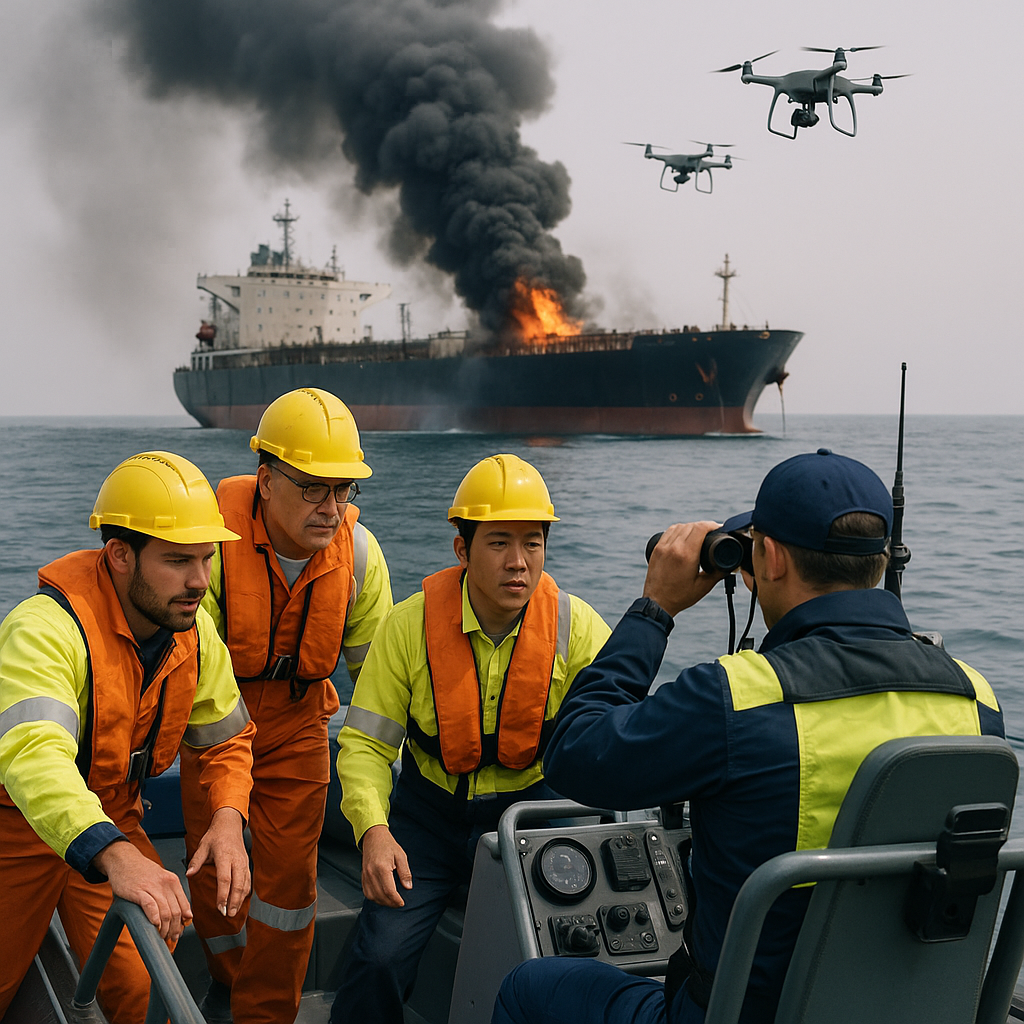
August 5, 2026 — A recent incident involving drone attacks near the Strait of Hormuz has brought maritime workforce safety and operational challenges into sharp focus. The attacks, which resulted in significant damage to a commercial vessel and a subsequent large fire, required an urgent and effective crew evacuation, highlighting the critical importance of emergency preparedness in high-risk maritime zones.
Impact on Maritime Workforce Safety
The maritime industry, especially in geopolitically sensitive regions like the Strait of Hormuz, faces escalating challenges regarding worker safety and security. The deployment of drones as weapons introduces unpredictable threat vectors that traditional maritime security measures did not fully anticipate.
The rescued crew members' experience underlines the need for enhanced training programs tailored to drone-related threats and crisis response. Employers and regulatory bodies are increasingly pressured to integrate advanced simulation exercises and real-time threat detection technologies to prepare maritime workers for such incidents.
Technological Demands and Workforce Adaptation
The incident has accelerated interest in innovative solutions that combine cybersecurity, drone detection systems, and automated response protocols. These technologies necessitate workforce upskilling, particularly in remote monitoring and operational command areas, to mitigate risks effectively.
Shipping companies and port authorities are beginning to prioritize personnel capable of managing both physical and cyber-threats, creating a hybrid skill set that blends traditional maritime expertise with advanced technological proficiency.
Emergency Response and Crisis Management
Quick and coordinated emergency response was pivotal in minimizing casualties during the recent attack. This event has highlighted gaps and opportunities in current maritime crisis management training programs, emphasizing multidisciplinary coordination involving crew members, drone operators, and security teams.
Key improvements identified include:
- Enhanced real-time communication systems between vessels and shore-based emergency response units.
- Regular drills simulating drone-based attacks to improve crew readiness.
- Investment in protective gear and fire suppression technologies tailored for drone attack scenarios.
Broader Implications for the Global Workforce
While this incident occurred in a specific strategic maritime location, it reflects a global trend where workforce environments are increasingly subject to unconventional security challenges. Industries reliant on complex supply chains and global transportation networks must reassess workforce safety and adaptability to emerging threats.
Stakeholders worldwide are called to innovate workforce planning, embed resilience in operational protocols, and leverage cross-sector collaboration to safeguard workers and maintain critical infrastructure functionality amid evolving technological and security landscapes.










No comments yet. Be the first!