
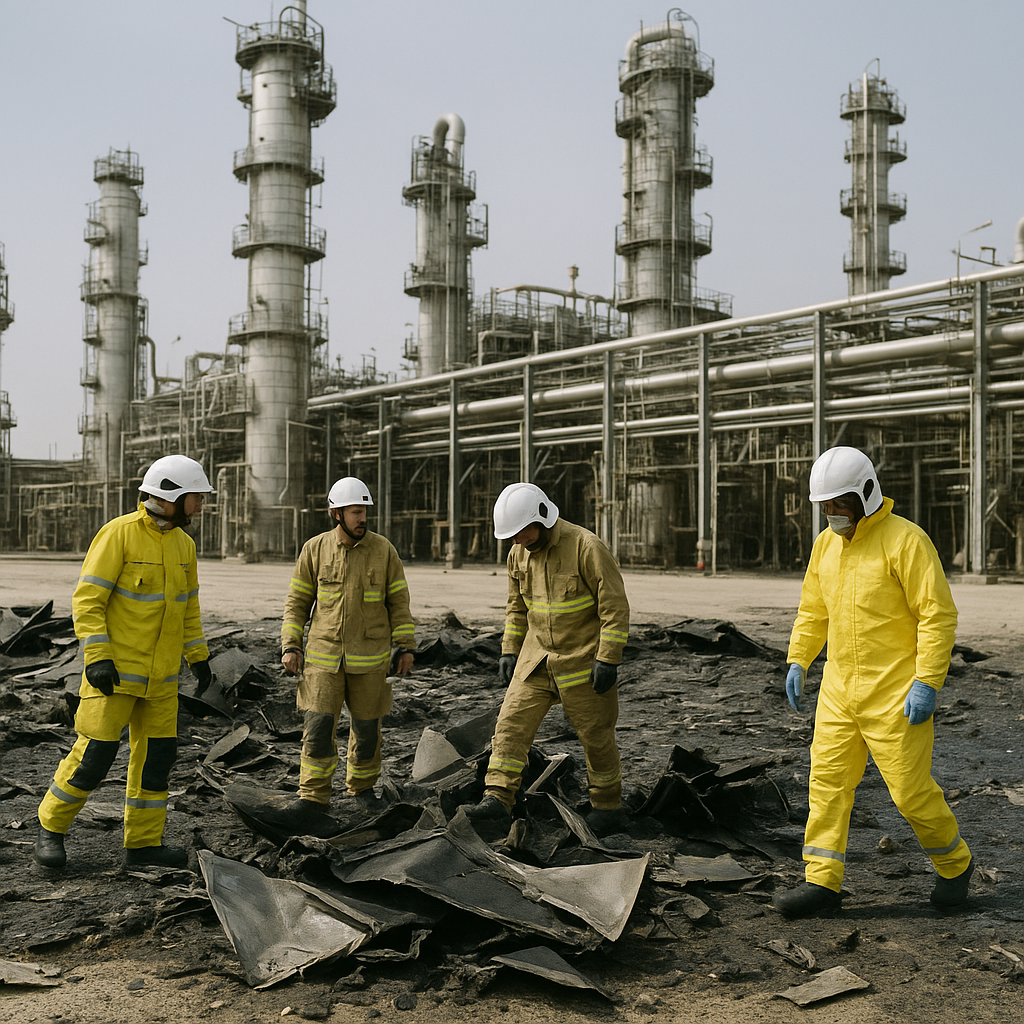
On October 13, 2026, a ballistic missile attack targeted a critical facility operated by a leading Saudi oil company, sending ripples across global energy markets and workforce frameworks. This event underscores the growing intersection between geopolitical risk and workforce management in the energy sector, an area vital to maintaining global economic stability.
The strike, confirmed to have caused operational disruptions, highlights several challenges facing the global workforce within the oil and gas industry. The need to ensure employee safety, maintain operational continuity, and adapt workforce skills to increasingly volatile environments has never been more pronounced.
Workforce Safety and Security Enhancements
In response to the missile attack, energy companies worldwide are reassessing their protocols for workforce protection. The incident spotlights heightened vulnerabilities in facilities situated in geopolitically sensitive regions, necessitating:
- Enhanced security infrastructure and surveillance technologies to protect personnel and critical assets.
- Comprehensive emergency response training tailored for conflict scenarios.
- Investment in resilience programs supporting psychological well-being of employees facing security threats.
Such measures are key to sustaining workforce morale and preventing operational disruptions that threaten energy supply chains globally.
Operational Continuity and Supply Chain Workforce Challenges
The disruption at a cornerstone oil-processing facility poses serious challenges for operational stability. Companies must now focus on workforce agility and supply chain management, prioritizing:
- Cross-training employees to swiftly adapt to shifting operational demands.
- Leveraging remote monitoring and automation where possible to reduce onsite workforce exposure.
- Collaborating internationally to mitigate supply chain interruptions caused by regional conflicts.
This incident catalyzes the reassessment of workforce models, with an emphasis on flexibility and technological integration to ensure uninterrupted energy production.
Accelerating Skill Adaptation in a Geopolitical Context
Geopolitical risks are increasingly shaping the energy labor market. The missile strike demonstrates that workers must now possess a broader range of skills beyond technical expertise, including risk assessment and crisis management capabilities.
Energy firms and educational institutions are therefore expanding training curricula to incorporate:
- Security risk awareness and mitigation strategies.
- Use of emerging technologies for monitoring and responding to threats.
- Psychological resilience and teamwork under duress.
This skill evolution aims to cultivate a workforce prepared to operate proficiently under complex, high-pressure conditions.
Global Workforce Collaboration and Policy Implications
The strike's far-reaching implications emphasize the importance of international cooperation in workforce planning and energy security policy. Governments and industry leaders are urged to enhance coordination for:
- Sharing best practices for workforce protection in conflict zones.
- Formulating policies that support workforce mobility and security.
- Encouraging investments in workforce development programs targeting geopolitical resilience.
These collaborative efforts are vital to safeguarding the human capital that underpins global energy infrastructure.
Conclusion
As the world confronts the consequences of the ballistic missile strike on this pivotal Saudi oil facility, the global workforce in the energy sector is at a critical juncture. Addressing the intertwined challenges of security, operational continuity, and skill adaptation is essential to building a resilient energy workforce ready to navigate future uncertainties shaped by geopolitical shifts.









No comments yet. Be the first!