
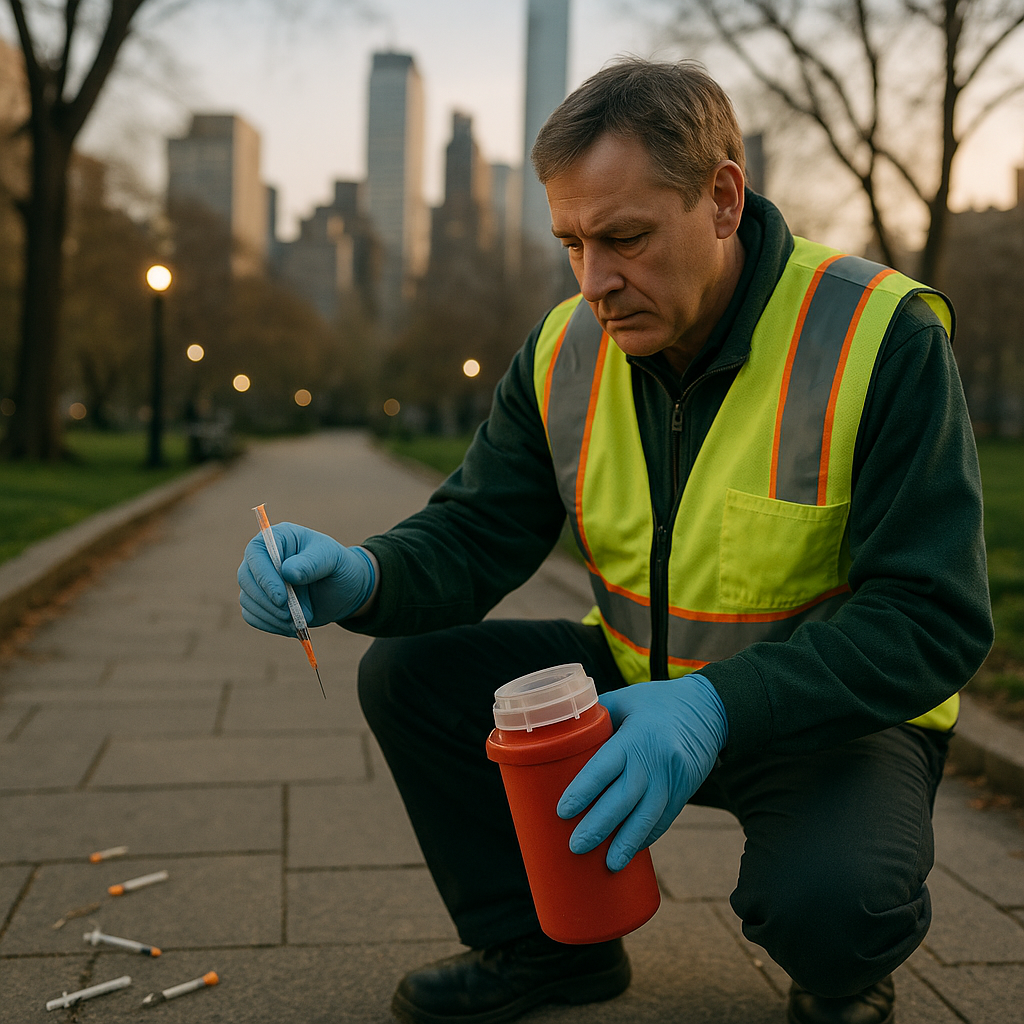
On July 19, 2026, New York City officially made permanent its groundbreaking program that pays drug users to collect used syringes. This initiative seeks to address public health concerns stemming from improper disposal of needles while simultaneously fostering workforce inclusion among a marginalized group.
Workforce Innovation Through Public Health Initiatives
Originally launched as a pilot project, the program incentivizes individuals who use drugs to safely collect and submit used syringes in exchange for monetary compensation. This approach responds to the dual challenge of syringe littering and the need for employment opportunities for communities often excluded from the formal labor market.
The city government collaborates with public health agencies and non-profit organizations to implement this effort, which has been met with mixed public reactions but increasingly recognized for its impact on public health and workforce development.
Impact on Urban Workforce and Public Safety
This initiative contributes to workforce diversification and offers a rare form of employment that is both flexible and impactful for participants. Aside from reducing health hazards associated with discarded needles, the program provides participants with a regulated means of income and engagement with support services.
- Economic inclusion: Participants gain financial support and potential pathways to further employment or health services.
- Health benefits: The city reduces the risk of needle-stick injuries among residents and city workers.
- Community engagement: Encourages trust-building between marginalized individuals and public institutions.
Challenges and Opportunities
Despite demonstrated benefits, the program faces challenges related to public perception, scalability, and long-term sustainability. Critics highlight concerns about enabling drug use, while advocates emphasize harm reduction and workforce inclusion.
Experts in workforce development stress the importance of integrating such programs within broader social services to maximize positive outcomes, including education, healthcare access, and skills training.
Broader Implications for Workforce Policy
This initiative signals a shift in how cities address complex social issues by integrating public health solutions with innovative workforce strategies. As urban areas grapple with substance use crises and job market exclusion, similar programs could inform policies that balance social support with economic inclusion.
Stakeholders are monitoring outcomes closely to determine best practices and potential adaptation for other vulnerable populations.
Conclusion
New York City's decision to make permanent the syringe collection program reflects evolving attitudes toward workforce diversification and public health challenges. By providing income opportunities to drug users while improving environmental safety, the city pioneers a novel model of social and economic intervention that could influence global approaches to workforce inclusion and harm reduction.










No comments yet. Be the first!