
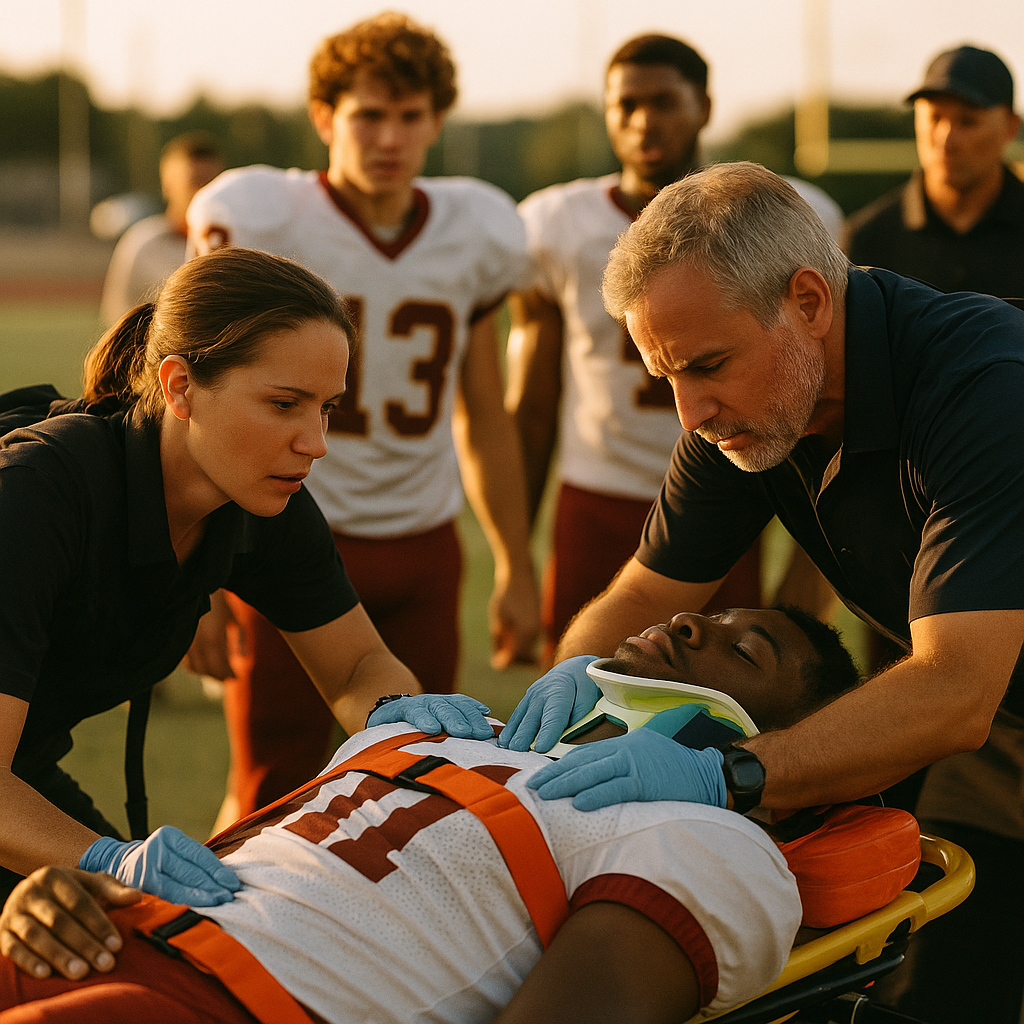
On September 26, 2026, a significant event unfolded during a collegiate football game between the Oregon Ducks and the USC Trojans, marking an illustrative case for workforce health and safety considerations in high-stakes team environments. Oregon Ducks quarterback Dante Moore suffered a severe hit resulting in him being carted off the field, underscoring critical challenges prevalent in managing physical risks and employee well-being in demanding sectors.
Implications for Workforce Health and Safety
The incident involving Moore exemplifies the inherent risks in professions demanding peak physical performance under pressure. In workforce contexts beyond sports, such as manufacturing, construction, or emergency response, similar considerations emerge regarding the prevention of occupational injuries and the implementation of efficient response mechanisms.
Key lessons derived include the importance of:
- Proactive Risk Assessment: Identifying high-risk activities and introducing preventive measures to mitigate injury potential.
- Immediate Response Protocols: Ensuring rapid medical attention and safe extraction processes to minimize long-term health impacts.
- Employee Training: Preparing staff and teams to recognize hazards and execute safety procedures effectively.
Workforce Resilience and Team Dynamics
Beyond physical health, the psychological and operational repercussions on teams exposed to sudden workforce incapacitation merit attention. The abrupt removal of a vital team member, such as a quarterback in sports or a key operator in industrial settings, disrupts workflow continuity and challenges leadership adaptability.
Organizations must cultivate resilience through strategic planning, cross-training, and strong communication channels to sustain performance despite unexpected personnel changes.
Technological and Managerial Advances
Advances in technology also play a pivotal role in enhancing workforce safety and efficiency. Wearable health monitors, real-time data analytics, and remote supervision are progressively integrated into various sectors to anticipate problems and tailor responses dynamically.
Management practices are evolving to emphasize:
- Data-Driven Decision Making: Leveraging health and performance data to inform scheduling and task assignments.
- Employee Well-being Programs: Prioritizing mental and physical health through comprehensive support systems.
- Collaborative Safety Cultures: Involving employees at all levels to champion safety norms.
Conclusion
The incident of Dante Moore on September 26, 2026 transcends the realm of sports, providing a powerful framework to examine broader workforce management challenges. High-pressure environments demand vigilant safety strategies, adaptable team structures, and the integration of technology to safeguard human capital and maintain operational excellence.








No comments yet. Be the first!