
Employability metrics are changing—and universities are paying close attention. Global reports from the World Economic Forum, OECD, and LinkedIn consistently highlight a growing demand for soft skills across industries. As a result, higher education institutions are rethinking not only what students learn, but how they learn it.
This shift reflects a deeper transformation: knowledge alone is no longer a reliable predictor of workforce readiness. Instead, the ability to apply that knowledge in dynamic, collaborative, and uncertain environments has become the defining factor.
From knowledge acquisition to capability development
Traditional academic models have historically emphasized content mastery. While this remains important, institutions are increasingly integrating capability-based education frameworks that prioritize transferable skills such as critical thinking, communication, and adaptability.
Organizations like the OECD have emphasized the importance of “global competence,” which combines cognitive, social, and emotional skills. This concept is now influencing curriculum design in universities across Europe, North America, and parts of Asia.
How learning design is evolving across institutions
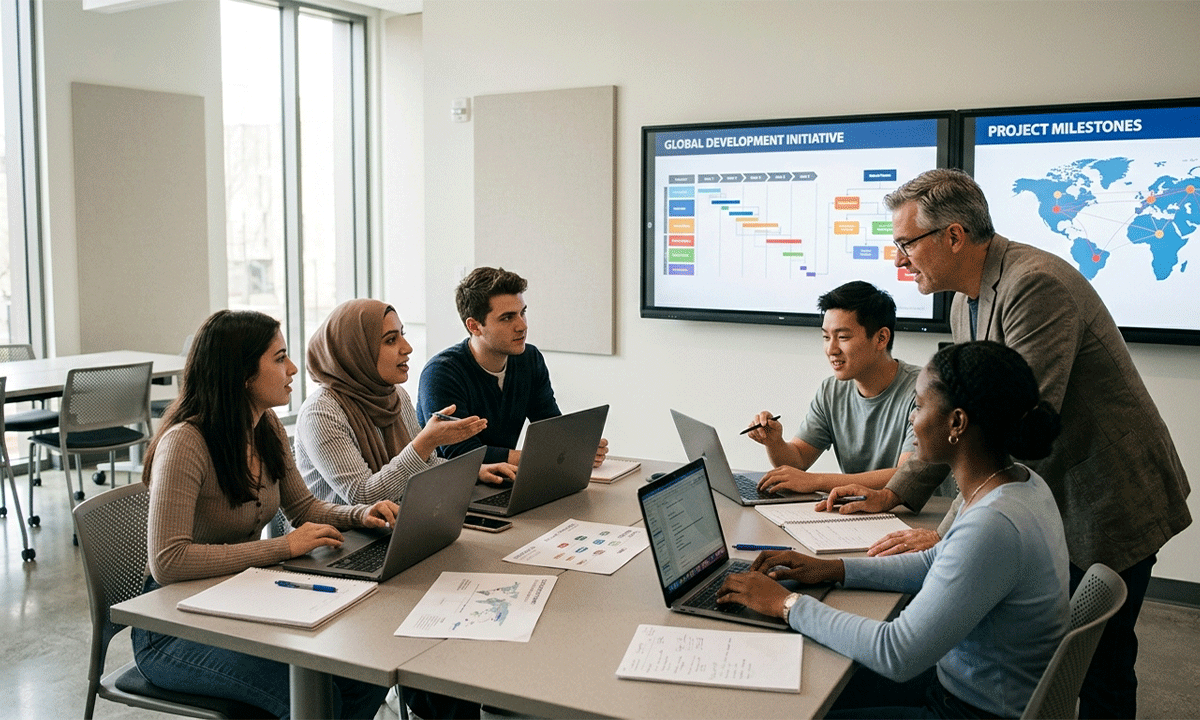
To develop soft skills effectively, universities are moving away from lecture-based formats and adopting experiential learning models. Project-based learning, interdisciplinary collaboration, and real-world simulations are becoming standard components of modern programs.
Key shifts in educational delivery
Several structural changes illustrate how institutions are embedding soft skills into the learning experience:
- Assessment redesign: moving from exams to performance-based evaluations and portfolios.
- Collaborative learning environments: encouraging teamwork across disciplines and cultures.
- Digital integration: using virtual platforms to simulate professional scenarios.
- Continuous feedback systems: enabling iterative skill development rather than one-time grading.
These approaches aim to bridge the long-standing gap between academic preparation and workplace expectations.
Global implications for workforce readiness
The emphasis on soft skills is not limited to specific regions. According to the World Economic Forum’s Future of Jobs Report, skills such as analytical thinking, resilience, and leadership are consistently ranked among the most critical worldwide.
This global alignment suggests that higher education institutions must prepare students not just for local labor markets, but for an interconnected workforce where adaptability and communication are essential.
A long-term shift in the value of education
The growing importance of soft skills signals a broader redefinition of educational value. Degrees are increasingly evaluated not only by their academic rigor, but by their ability to produce graduates who can navigate complexity and drive impact.
For universities, this represents both a challenge and an opportunity: those that successfully integrate soft skills into their core offerings will be better positioned to remain relevant in a rapidly evolving global education landscape.













No comments yet. Be the first!