
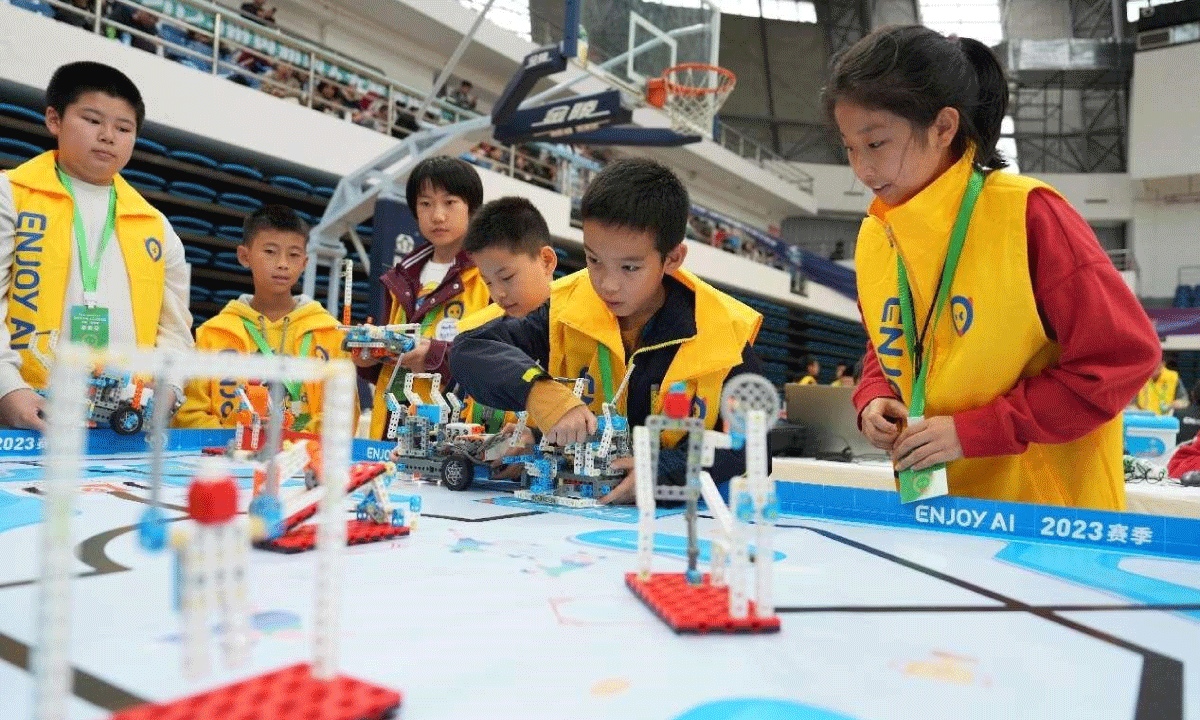
Academic programs under transformation
Universities are revising their curricula to incorporate artificial intelligence, data science, and automation. Traditional disciplines are being restructured to include interdisciplinary approaches.
This transformation reflects the need for graduates who can adapt to complex technological environments.
Education systems are becoming more flexible and responsive to industry trends.
Bridging the gap between theory and application
Educational institutions are increasing collaboration with industries to provide practical learning experiences. Students are gaining exposure to real-world challenges.
This approach enhances employability and ensures that graduates are better prepared for evolving job markets.
Hands-on experience is becoming a core component of modern education.
Emerging directions in global learning systems
- Expansion of AI-focused degree programs.
- Growth of online learning platforms worldwide.
- Stronger partnerships between academia and industry.
- Increased emphasis on lifelong learning.
- Global competition for tech-skilled talent.
These developments indicate a broader shift in how education systems operate globally.
The rise of artificial intelligence in China’s industry is not just an economic milestone; it is a catalyst for educational transformation. Institutions that adapt quickly will play a critical role in shaping the next generation of professionals. As the demand for technological skills continues to grow, education will remain at the center of global innovation and workforce development.









No comments yet. Be the first!