
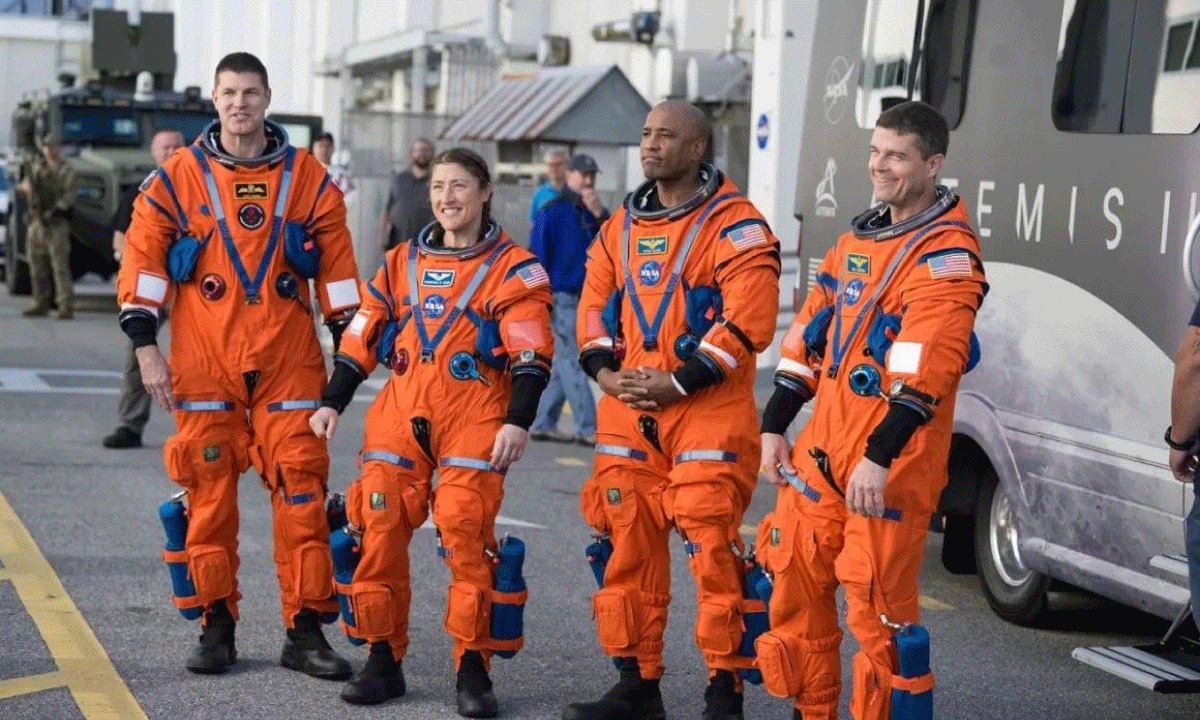
The release of new images from the Moon’s far side linked to Artemis II has reignited global interest in space exploration. Beyond its scientific value, the mission is triggering a shift in how universities and educational institutions prepare students for emerging industries connected to space, data science, and advanced engineering.
Universities adapting to a new scientific frontier
Higher education institutions are rapidly evolving their programs to align with the demands of missions like Artemis II. Traditional degrees are being restructured to include interdisciplinary approaches that combine engineering, data science, and space studies.
This transformation reflects the growing need for graduates who can operate across multiple domains and solve complex global challenges.
Space is no longer a niche field; it is becoming a mainstream academic focus.
From classrooms to real-world space ecosystems
Educational models are shifting from theoretical instruction to experiential learning. Partnerships between universities, space agencies, and private companies are enabling students to work on real-world projects.
These collaborations provide exposure to cutting-edge technologies and prepare students for careers in global industries.
The result is a more dynamic and practical learning environment.
Key trends shaping future education
- Integration of AI and data science into science curricula.
- Growth of online education focused on space-related skills.
- International collaboration in research and innovation.
- Expansion of STEM programs with interdisciplinary focus.
- Increased demand for lifelong learning in technology fields.
These trends highlight a broader transformation in global education systems. Institutions that adapt quickly will be better positioned to attract students and remain competitive.
Artemis II is not just advancing space exploration; it is redefining how knowledge is created and delivered. As education systems evolve, they will play a critical role in preparing the workforce needed for the next era of scientific and technological progress.








No comments yet. Be the first!