
Artificial intelligence is no longer a future concept in higher education. It is already embedded in how students learn, how faculty teach, and how institutions operate. What remains uncertain is not its presence, but its direction.
Across universities worldwide, the conversation has shifted from whether to adopt AI to how to integrate it without compromising academic depth. This question sits at the center of a new #GlobalTalks session in partnership with Blackwell Global University, which will examine the evolving relationship between artificial intelligence and university learning.
Titled “Artificial Intelligence applied to education: tools and strategies to transform university learning,” the session will explore how AI is moving from isolated use cases into a structural component of education systems. The focus is not on technology alone, but on how it reshapes learning models.
One of the defining trends in 2026 is the transition toward more adaptive and data-driven education. AI systems are increasingly used to personalize learning pathways, identify knowledge gaps, and optimize academic performance. At the same time, they are raising new questions about autonomy, ethics, and the role of critical thinking.
Rather than replacing traditional education, AI is redefining its foundations. The emphasis is shifting toward skills such as problem framing, analytical reasoning, and the ability to interact effectively with intelligent systems.
The session will be led by Gabriel Flores Rozas, an education specialist whose work intersects instructional design, data analysis, and digital learning environments. His approach reflects a broader shift in academia: the need to align educational methodologies with technological realities.
During the discussion, attention will be given to applied strategies, including prompt design, AI-assisted evaluation, and the integration of machine learning into academic processes. These elements are increasingly relevant as universities seek to balance efficiency with academic rigor.
Behind this conversation lies a global transformation. Higher education is moving toward more flexible, scalable, and technology-driven models, where learning is continuous and not confined to a single stage of life.
The session is part of #GlobalTalks, an initiative developed by Global Academic Network to bring together perspectives on emerging trends in education, innovation, and technology. Through these dialogues, institutions are not only observing change but actively participating in shaping it.
As artificial intelligence continues to evolve, so does its role in education. Understanding how to navigate this shift is becoming essential—not only for institutions, but for anyone engaged in the future of learning.
AI in higher education trends 2026: #GlobalTalks to explore how artificial intelligence is reshaping university learning
31 Mar, 2026 | 00:00
.
PE
Updated on
26/03/2026 16:10
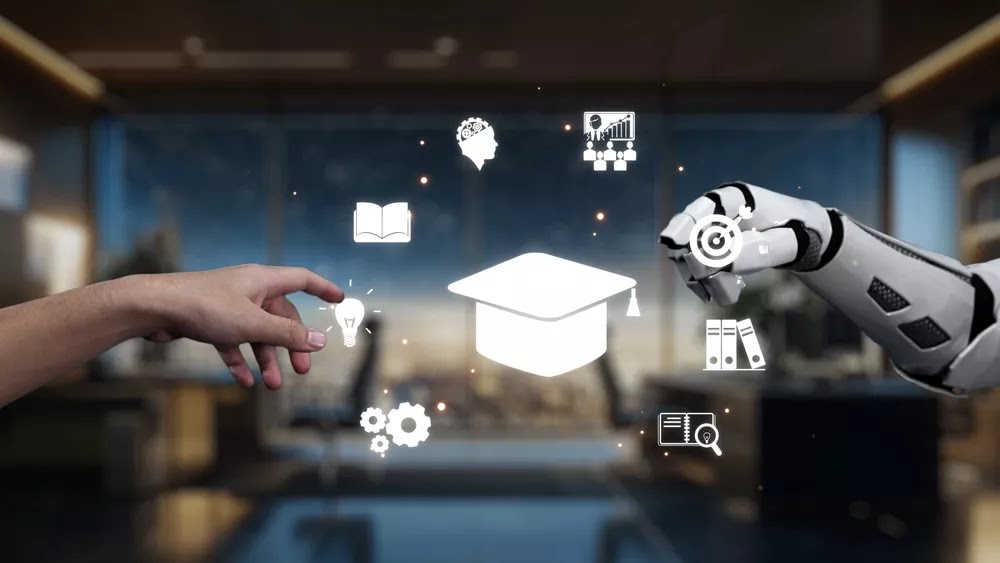
As artificial intelligence reshapes higher education worldwide, a new #GlobalTalks session will explore practical strategies, tools, and the evolving role of AI in university learning.










No comments yet. Be the first!