
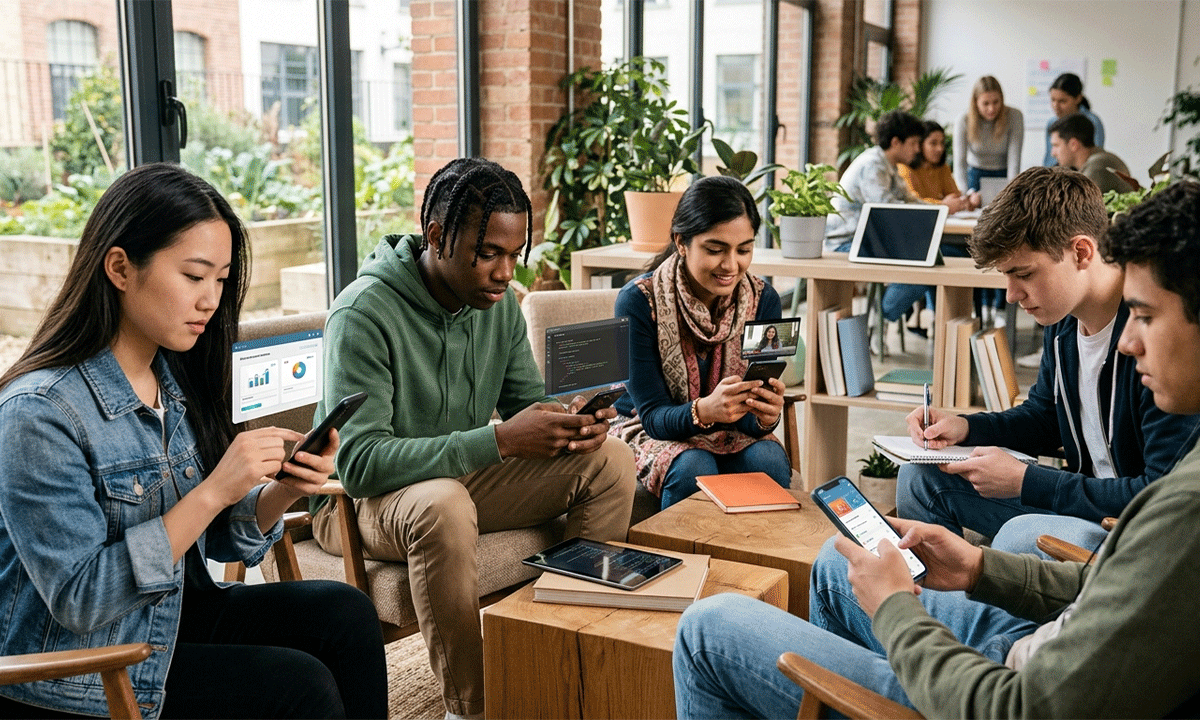
From classroom dependency to mobile-first learning behavior
Students are increasingly shifting away from traditional, classroom-dependent learning models toward mobile-first environments. Educational apps now provide immediate access to content, interactive exercises, and real-time feedback, enabling learners to study anytime and anywhere. This flexibility is not only changing study habits but also redefining expectations around accessibility and efficiency in education.
As a result, learning is becoming more fragmented yet more continuous. Instead of relying on long, structured sessions, students engage in shorter, high-frequency interactions with content. This shift aligns with how digital-native generations consume information, favoring speed, adaptability, and personalization over static formats.
Skill acquisition becomes faster, modular, and data-driven
Mobile learning apps are accelerating how skills are acquired by breaking down complex topics into smaller, manageable units. This modular approach allows students to progress at their own pace while maintaining a clear sense of achievement through micro-milestones. The result is a more engaging and sustainable learning process.
Additionally, these platforms rely heavily on data to personalize learning paths. Algorithms analyze user behavior, identify gaps, and recommend content accordingly. This creates a feedback loop where learning becomes increasingly efficient over time, mirroring adaptive systems used in professional training environments.
Implications for higher education institutions worldwide
The rise of mobile learning challenges universities to rethink their role in the educational ecosystem. Institutions are no longer the sole providers of knowledge; instead, they must integrate with digital platforms that students already use. This requires a shift toward hybrid models that combine formal education with app-based learning experiences.
Universities that fail to adapt risk losing relevance among younger audiences who expect flexibility and immediacy. On the other hand, those that embrace mobile learning can expand their reach, offering more personalized and scalable education solutions across borders.
A new learning paradigm shaping the global workforce
Mobile learning is not just transforming how students learn—it is shaping how future professionals think, adapt, and perform. Learners trained through app-based environments develop habits of continuous learning, self-regulation, and digital fluency, all of which are critical in modern workplaces.
As these behaviors become standardized, they will influence hiring practices and workforce development strategies worldwide. Educational systems that align with this shift will be better positioned to prepare students for a labor market that values agility, autonomy, and lifelong learning.









No comments yet. Be the first!