
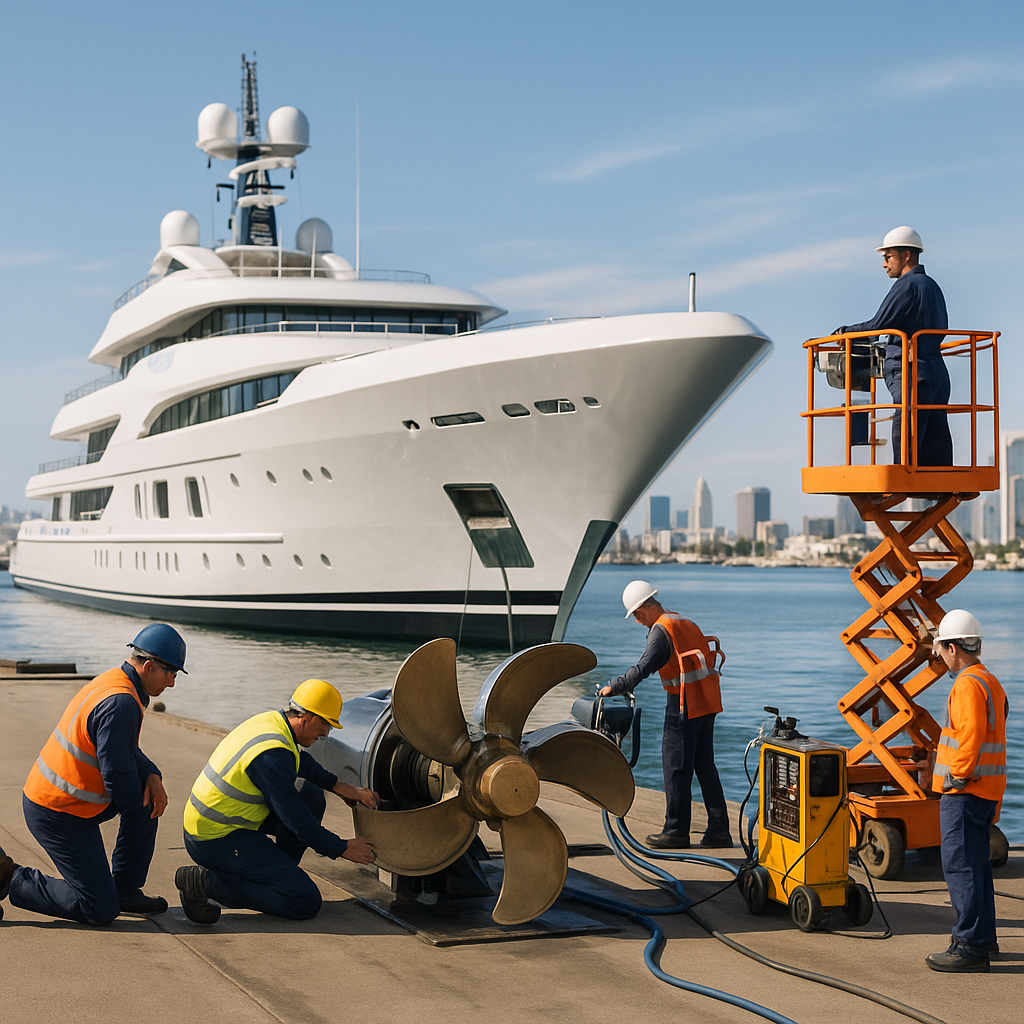
On September 4, 2026, Los Angeles welcomed the arrival of a $150 million superyacht, an event that has attracted considerable public attention due to the vessel’s concealed identity and unique features. While the owner remains officially undisclosed, industry insiders have assessed the influx as a reflection of evolving trends within the luxury maritime sector and an indicator of growing employment opportunities for specialized global workforce segments.
Growth of the Luxury Maritime Workforce
The docking of this unmarked superyacht underlines an increasing demand for highly skilled professionals in yacht construction, maintenance, and operations. The high investment exemplifies substantial capital flow into coastal economies like Los Angeles, where support services for such vessels expand rapidly.
This growth involves a broad spectrum of occupations, including:
- Marine engineers and naval architects adapting cutting-edge technology for superyacht design.
- Skilled technicians dedicated to maintenance of complex onboard systems.
- Hospitality staff trained in luxury service management onboard the vessels.
- Logistics and port operations personnel managing secure and efficient dockings.
Technological Advancements and Workforce Adaptation
The vessel’s secretive nature and sophisticated technology demand workforce agility and continuous upskilling. Innovations include eco-friendly propulsion systems and state-of-the-art navigation technologies, requiring specialized training programs that prepare technicians and crew to meet evolving standards.
Companies involved in superyacht construction and servicing increasingly prioritize workforce development through:
- Collaborations with maritime academies and vocational training centers.
- Investment in apprenticeships and certification programs specific to luxury maritime engineering.
- Implementation of digital tools for remote diagnostics and real-time operational management.
Economic Impact and Labor Market Dynamics in Los Angeles
The arrival of such high-value vessels injects significant economic stimulus into regional labor markets. Beyond direct employment, ancillary industries such as local marine supply chains, tourism, and upscale hospitality benefit indirectly.
However, this growth also presents challenges:
- Need for a diverse workforce capable of integrating traditional maritime skills with modern technological competencies.
- Ensuring sustainable workforce development in line with environmental regulations and green technology standards.
- Balancing demand for luxury service excellence against fair labor practices in a niche, highly competitive sector.
Global Workforce Perspectives
Los Angeles’s role as a strategic port for superyachts reflects a global pattern where luxury maritime industries drive cross-border talent mobility. International recruitment and certification harmonization become essential to maintain operational standards and meet client expectations worldwide.
Workforce strategies focusing on globalization emphasize:
- Encouraging multilingual and multicultural competencies among crew members.
- Standardizing training to facilitate international certification and employment portability.
- Integrating emerging technologies that allow remote monitoring and virtual collaboration across global maintenance teams.
Conclusion
The discreet docking of an ultra-luxury superyacht in Los Angeles encapsulates a transformative moment for the high-end maritime workforce. The sector’s expansion signals increased complexity in skill requirements, technological integration, and labor dynamics, positioning Los Angeles as a pivotal hub in the global luxury vessel economy. As demand for specialized maritime professionals grows, industry stakeholders must invest strategically in workforce development to sustain competitive advantage and operational excellence.













No comments yet. Be the first!