
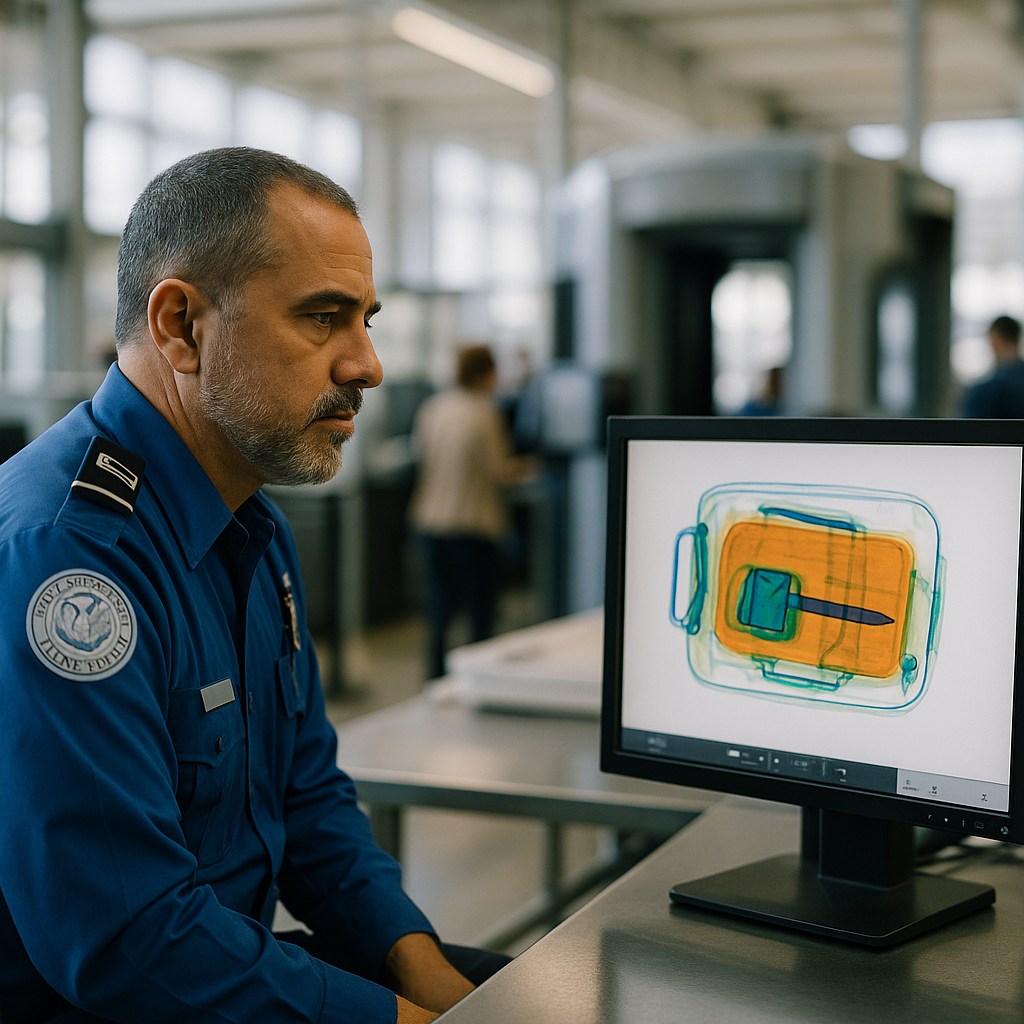
On September 24, 2026, Transportation Security Administration (TSA) personnel at a prominent United States airport encountered a unique security challenge that exemplifies the dynamic demands placed on the global workforce responsible for transportation safety.
During routine X-ray screening of passenger carry-on baggage, a TSA officer identified a suspicious sharp object that did not conform to typical weapon profiles. Upon closer inspection, the object was found to be cleverly concealed within a highly unusual item, designed to slip past conventional detection methodologies.
Adapting to Emerging Security Challenges
This event highlights the ongoing pressures on security personnel to remain alert and flexible amid increasingly sophisticated concealment techniques. Global security workforces in aviation must integrate advanced technological tools with keen human judgement to maintain effective threat detection.
- Training upgrades: TSA’s commitment to continuous professional development ensures officers remain adept at interpreting complex X-ray images and recognizing unconventional threats.
- Technological enhancement: Incorporation of AI-assisted imaging analysis complements human capabilities, reducing both false positives and overlooked hazards.
- Operational readiness: Officers are trained to respond swiftly and safely to irregular findings while minimizing passenger disruption.
Implications for the Global Workforce
The incident is a microcosm of broader workforce challenges in sectors requiring high-stakes risk management and rapid decision-making. It emphasizes how security personnel worldwide must balance human factors and technology, ensuring safety without compromising efficiency.
Furthermore, this scenario underlines the necessity of fostering resilience among workers exposed to rapidly evolving threat landscapes, including:
- Developing adaptive cognitive skills to process ambiguous visual data.
- Enhancing cross-disciplinary collaboration among security teams and technological developers.
- Maintaining mental well-being in high-pressure environments.
Broader Workforce Innovation and Training Trends
Transportation security agencies globally are investing in immersive training environments, such as virtual reality simulations, to replicate rare but high-risk scenarios similar to the unusual concealment discovered. This approach accelerates skill acquisition and increases preparedness without real-world consequences.
Additionally, human-machine interface improvements are streamlining workflows, enabling officers to focus on pattern recognition tasks while automation handles routine screening, enhancing overall operational effectiveness.
Conclusion
This discovery not only reaffirms the vigilance of TSA officers but also serves as a case study in workforce agility within the global security sector. By embracing advanced technology, ongoing education, and psychological resilience, security workforces can meet emergent challenges effectively, safeguarding passengers and infrastructure worldwide.










No comments yet. Be the first!