
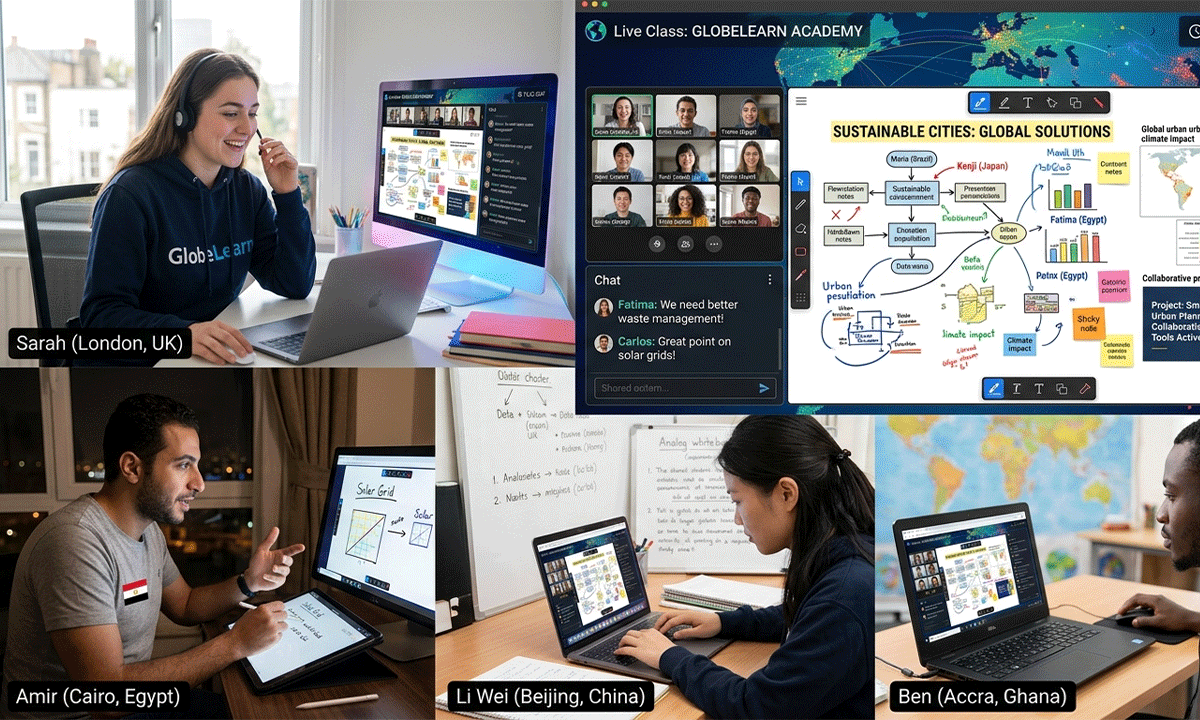
From content delivery to experience design
Higher education is undergoing a gradual but significant shift: learning is no longer defined by access to content, but by the quality of the experience surrounding it. As digital platforms expand, institutions are recognizing that simply transferring lectures online does not guarantee engagement or learning outcomes.
Research from UNESCO and the World Bank highlights that student engagement in online environments depends heavily on interactivity, feedback, and relevance. This has pushed institutions to rethink how courses are structured, moving toward experience-centered models.
Key components of effective digital learning experiences
Designing impactful digital learning experiences requires a combination of pedagogical strategy and technological integration. Institutions are investing in approaches that go beyond static content.
- Interactive learning environments that promote active participation
- Adaptive systems that personalize content based on learner progress
- Continuous assessment mechanisms that provide real-time feedback
- Integration of collaborative tools to simulate real-world scenarios
These elements contribute to higher retention rates and more meaningful learning outcomes, particularly in digital and hybrid education models.
Implications for global skills development
As digital learning experiences improve, their role in workforce development becomes more significant. The World Economic Forum has emphasized the importance of continuous reskilling, particularly in digital and cognitive skills.
Experience-driven learning enables learners to apply knowledge in practical contexts, bridging the gap between theory and application. This is particularly relevant in a global labor market where adaptability and problem-solving are highly valued.
Challenges institutions must address
Despite the potential benefits, implementing effective digital learning experiences presents challenges. Institutions must invest in infrastructure, faculty training, and instructional design capabilities.
There is also the challenge of ensuring equitable access to technology, as digital divides persist across regions. Addressing these issues is critical to ensuring that digital learning remains inclusive.
A redefinition of learning in a global context
The evolution of digital learning experiences signals a broader transformation in how education is delivered and consumed. Institutions that prioritize experience design are better positioned to meet the expectations of modern learners.
As global demand for flexible and relevant education continues to grow, experience-driven learning is likely to become a defining feature of successful educational systems.













No comments yet. Be the first!