
How a small European country became the world’s car production capital per person
12 Jan, 2026 | 11:15
.
PE
Updated on
28/04/2026 23:02
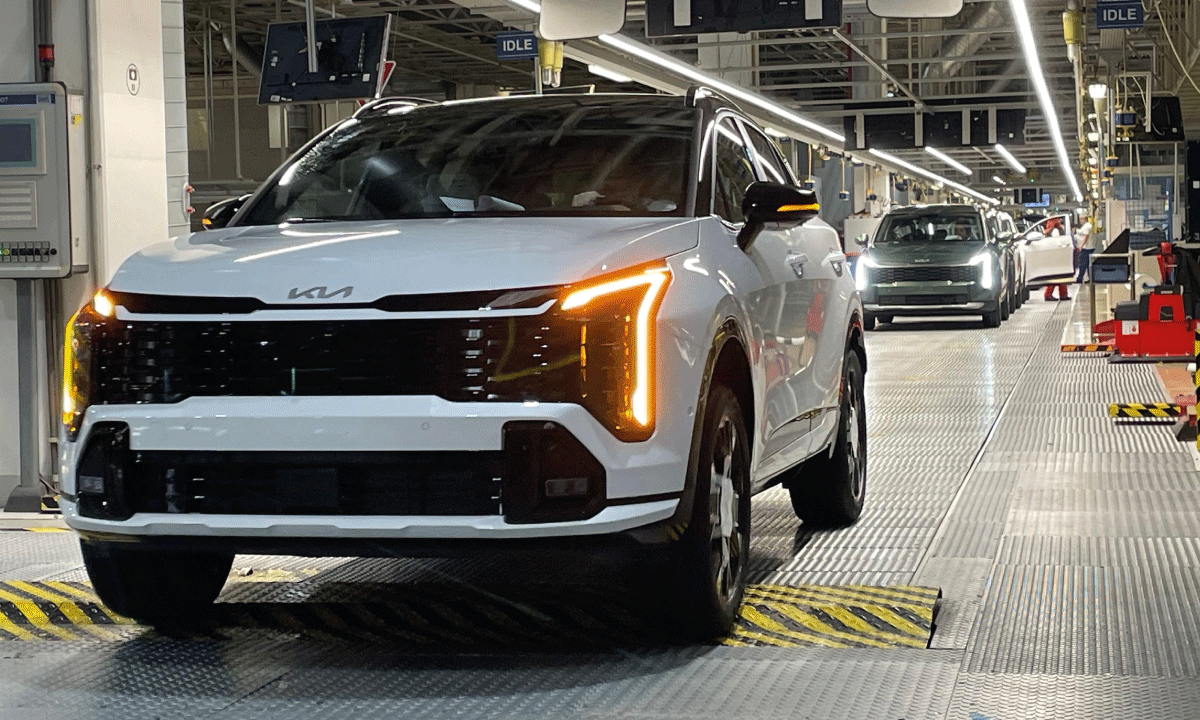
Slovakia became the world’s top car producer per capita through foreign investment, education and supply chains. Discover what this transformation reveals about the future of global manufacturing.
.custom-h2 {
font-size: 28px;
}
The unlikely rise of a manufacturing powerhouse
At first glance, Slovakia does not look like a global automotive giant. It is a landlocked country in Central Europe with a population similar to Costa Rica. Yet today, it produces more cars per capita than any nation on Earth.
Major automakers including Volkswagen, Kia, Stellantis and Jaguar Land Rover operate large manufacturing plants there. Volvo has also announced a new electric vehicle factory, signalling that the country’s automotive story is far from over.
This transformation did not happen by accident. It was the result of long-term strategy, globalisation and education working together.
From post-socialist economy to industrial hub
After the fall of communism in the 1990s, Slovakia faced a difficult transition. Like many Central and Eastern European nations, it needed to redefine its economic identity.
Instead of relying on traditional industries, the country focused on attracting foreign direct investment (FDI).
The strategy was simple but powerful:
Offer competitive labour costs
Invest in technical education
Build infrastructure for exports
Position the country inside European supply chains
The approach worked. Global automakers searching for efficient manufacturing locations found Slovakia ideally positioned near Germany, Europe’s industrial engine.
Why car manufacturers chose Slovakia
Car production depends on more than cheap labour. Automakers evaluate complex supply chain factors before investing billions in factories.
Slovakia offered three major advantages.
A strategic geographic location
Factories in Slovakia can ship vehicles quickly across Europe. Short transport routes reduce costs and delivery times.
A skilled technical workforce
Technical schools and engineering programmes prepared workers for modern manufacturing, robotics and automation.
A growing supplier ecosystem
Automotive factories attract hundreds of specialised suppliers. Over time, Slovakia developed a dense industrial cluster capable of supporting large-scale production.
This cluster effect made the country increasingly attractive to new investors.
The electric vehicle shift is the next chapter
The automotive industry is entering its most dramatic transformation in decades. Electric vehicles, automation and software-defined cars are reshaping the sector.
Volvo’s upcoming electric vehicle plant highlights how Slovakia is adapting to the next generation of mobility.
This shift shows that manufacturing success is not static. Countries must continuously upgrade skills and infrastructure to remain competitive.
Why this story matters globally
Slovakia’s rise illustrates a broader lesson about the global economy. Manufacturing is no longer concentrated only in traditional industrial powers. Smaller countries can become major players if they integrate into global value chains.
Similar patterns are emerging in regions such as Southeast Asia and Latin America. Countries that invest in education, logistics and innovation are positioning themselves as future industrial hubs.
What the future of manufacturing looks like
The automotive industry is becoming a fusion of manufacturing, software and energy.
Future factories will depend on:
Robotics and automation
Data analytics and AI
Battery technology
Global logistics networks
The countries that prepare their workforce for these changes will shape the next era of industrial growth.










No comments yet. Be the first!