
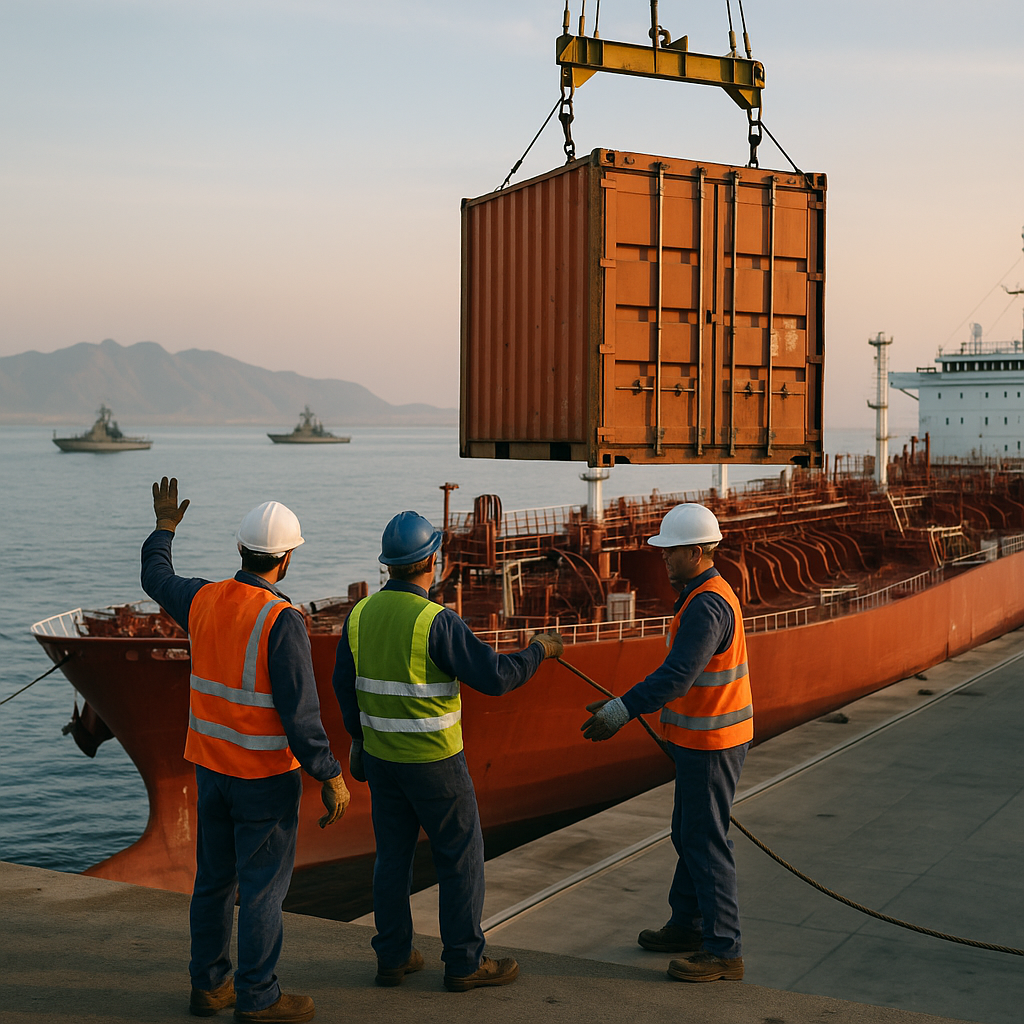
On August 8, 2026, a significant maritime accord between Iran and Oman regarding the strategic Strait of Hormuz was publicly disclosed. While the agreement holds geopolitical weight, its reverberations extend deeply into the realm of the global workforce and international commerce.
The Strait of Hormuz is a critical chokepoint through which approximately one-fifth of the world's oil trade transits daily, making it a pivotal artery not only for energy markets but also for industries and labor forces dependent on stable maritime logistics. This treaty anticipates changes in navigation protocols, which could affect shipping operations and workforce deployment in the shipping, logistics, and energy sectors worldwide.
Impact on Maritime and Energy Workforce
The navigation adjustments and potential new regulatory environments impose operational shifts for crews, port workers, and supply chain managers. Companies might need to recalibrate manpower allocations, training for maritime security compliance, and re-assessment of risk management strategies.
Additionally, the possibility of increased tensions in such a geographically sensitive zone may lead to temporary reroutings or delays, directly affecting contractual labor engagements and demanding workforce flexibility in shipping and oil extraction industries.
Global Trade and Labor Market Implications
Disruptions or uncertainties in the Strait of Hormuz impact global trade flows, particularly for economies reliant on Middle Eastern fuel. This can translate into increased volatility for manufacturing sectors dependent on consistent energy prices, thereby influencing labor demand and wage stability across international markets.
- Heightened operational costs for energy companies, possibly slowing hiring or investing in workforce expansion.
- Potential shifts in employment from oil-dependent regions to renewable energy sectors as companies hedge risks.
- Increased demand for workforce skilled in crisis management, maritime security, and logistics optimization.
Technological and Training Responses
To mitigate risks, firms are likely accelerating integration of digital tracking, automation, and remote monitoring technologies within their maritime and energy operations. This shift demands a re-skilling of the existing workforce and recruitment of specialized talent proficient in these advanced systems.
Institutions and corporate training programs may see amplified emphasis on specialized courses related to geopolitical risk, maritime law compliance, and supply chain resilience.
Broader Workforce Adaptability Challenges
Labor forces embedded in international transport corridors such as the Strait of Hormuz region must navigate an environment characterized by heightened uncertainty and regulatory evolution. Employers face challenges in ensuring safety, maintaining morale, and aligning skill sets with emerging operational demands.
Moreover, labor policies might need reconceptualization to incorporate flexible contracts and support systems for workers impacted by geopolitical and environmental unpredictability.
Conclusion
The Iran-Oman maritime agreement serves as a catalyst for substantial reassessment within global workforce sectors connected to energy and maritime logistics. It underscores the imperative for adaptable labor strategies, enhanced training infrastructures, and forward-looking technological investments to sustainably navigate an increasingly complex international landscape.












No comments yet. Be the first!