
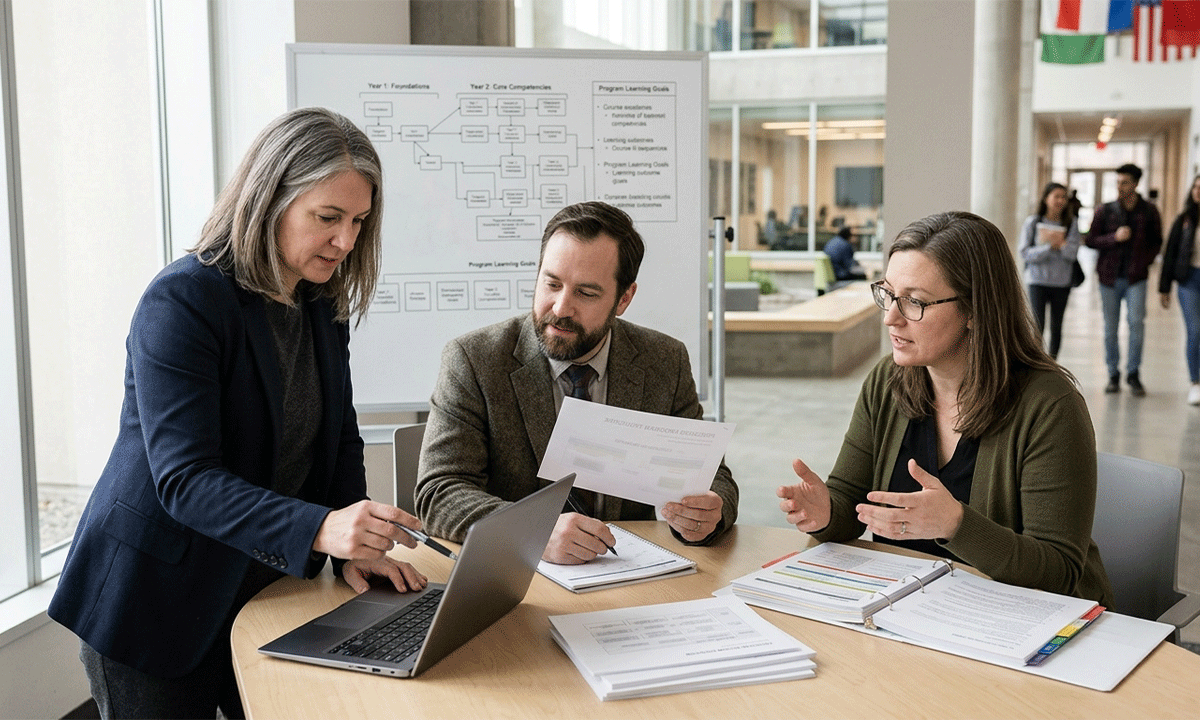
Higher education is responding to a new labor reality
Universities are no longer operating in isolation from labor market dynamics. The expectations employers place on graduates are increasingly shaping academic decisions, from curriculum design to teaching methodologies. This shift reflects a deeper transformation in how education is evaluated: not by content delivery, but by workforce readiness.
As industries evolve at a faster pace, higher education institutions are under pressure to ensure that graduates are not only knowledgeable, but also capable of applying that knowledge in complex, real-world environments.
From knowledge-based learning to competency-driven education
A major transformation underway is the shift from theoretical knowledge accumulation to competency-based learning models. Employers are signaling a preference for graduates who demonstrate practical capabilities rather than purely academic achievement.
This has led universities to rethink assessment systems, integrate experiential learning, and expand access to tools and environments that simulate real professional contexts. The objective is no longer only to teach concepts, but to ensure graduates can perform effectively within them.
The rise of hybrid learning ecosystems
Digital transformation has accelerated the development of hybrid education models that combine online learning, in-person instruction, and industry collaboration. This approach is becoming essential to align academic outcomes with labor market expectations.
Universities are increasingly partnering with companies to integrate real-world projects into academic programs, allowing students to engage with industry challenges before graduation. This reduces the gap between education and employment readiness.
Key capabilities universities are prioritizing globally
Educational institutions are now placing stronger emphasis on a set of transferable skills that align with global workforce expectations:
- Critical thinking and structured problem-solving
- Digital fluency across tools and platforms
- Collaboration in multicultural environments
- Adaptability to rapidly changing industries
- Data interpretation and decision-making skills
These competencies are becoming central to how universities define graduate success across different regions and disciplines.
A long-term transformation in education systems
The influence of employer expectations is not a short-term adjustment but part of a broader structural evolution in higher education. Universities that fail to adapt risk producing graduates whose skills no longer match labor market demands.
In contrast, institutions that integrate industry alignment, practical learning, and continuous curriculum updates are positioning themselves at the center of future workforce development. This shift is redefining the purpose of higher education in a global context.









No comments yet. Be the first!