
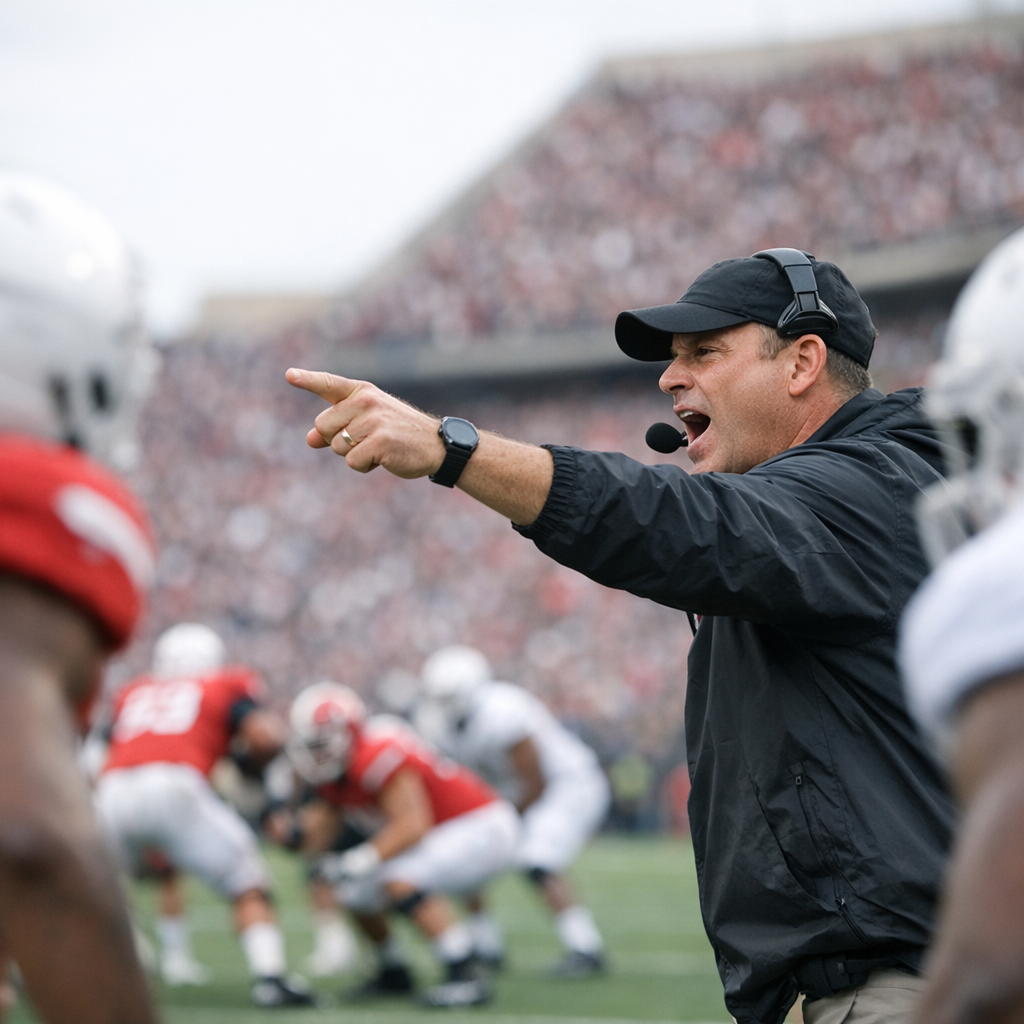
In the high-stakes environment of college athletics, leadership remains a critical focus not only on the field but also in how leaders respond to evaluations and external governance. On November 14, 2026, a notable episode in college football brought to light lessons on leadership, accountability, and resilience applicable beyond sports and into areas such as higher education administration and leadership training.
Context and Incident Overview
Recently, Curt Cignetti, a prominent college football coach, publicly criticized the decisions made by the College Football Playoff (CFP) committee, which determines team rankings and postseason opportunities. This public critique was quickly met with on-field realities when a player under Cignetti’s direction experienced significant challenges during a crucial game. The incident highlights the tension between public commentary and performance outcomes, offering valuable case studies on leadership humility and response to adversity.
Leadership Lessons for Higher Education
While the original incident stems from the sports domain, the implications resonate deeply within university leadership and the broader academic environment. The dynamic between Cignetti and the CFP committee reflects broader themes of governance, transparency, and stakeholder engagement prevalent in academia today.
- Accountability and Transparency: Just as coaches must accept evaluations by committees, higher education leaders are regularly assessed by faculty, boards, and accreditation bodies, emphasizing the importance of transparent processes.
- Resilience Under Pressure: The coach’s public challenge followed by quick reality check parallels the need for adaptability and resilience among university executives facing constant scrutiny and high expectations.
- Communication Strategies: Public discourse around performance and decisions reveals the significance of measured communication, a skill essential for managing stakeholder relations in educational institutions.
The Role of Performance Metrics and Evaluation
The CFP committee functions as an evaluative body applying specific metrics to rank teams, akin to how universities must navigate rankings, funding criteria, and research outputs. This comparison allows a deeper understanding of the complexities leaders in higher education face when performance is quantified and publicly scrutinized.
Building a Culture of Constructive Feedback
In the aftermath of the coach’s critique, the interaction underlines the risk and opportunity inherent in feedback. For higher education institutions, fostering an environment where criticism leads to growth rather than conflict is crucial for sustained improvement in teaching, research, and governance.
Implications for Leadership Development Programs
The episode suggests incorporating real-world case studies from diverse fields like sports into leadership curricula, emphasizing:
- Decision-making under public scrutiny
- Balancing confidence with humility
- Engaging constructively with governing bodies
Conclusion
This recent episode involving Curt Cignetti and the CFP committee transcends its immediate sports context, offering profound insights into leadership dynamics relevant to higher education. Effective leadership requires managing external evaluations, communicating strategically, and maintaining resilience amid challenges. Higher education leaders and students can derive valuable lessons by reflecting on these parallels, enriching leadership programs and institutional governance models aimed at navigating a complex and public performance landscape.











No comments yet. Be the first!