
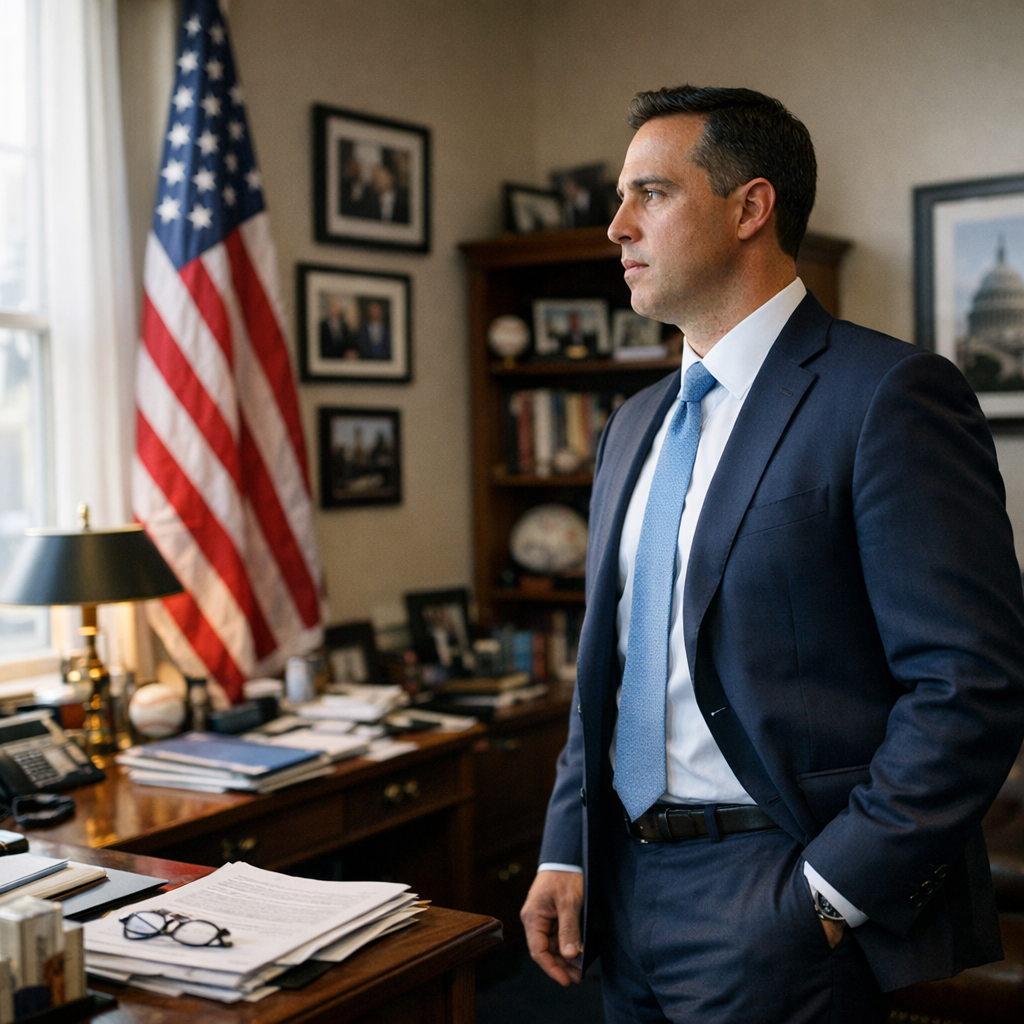
November 18, 2026 – Mark Teixeira, best known as a World Series champion and former Major League Baseball slugger, has recently transitioned from sports to politics, securing a seat in the U.S. Congress. Despite his high-profile background, Teixeira's assignment to the smallest and least desirable office space on Capitol Hill—dubbed the "Mr. Irrelevant" office lottery—presents a compelling case study on workplace dynamics, symbolism, and resource allocation within established institutional frameworks.
Analyzing Workplace Hierarchies and Space Allocation
Office assignments within political institutions often mirror underlying hierarchies and established norms, which extend beyond politics into any form of organized labor. Teixeira’s placement in this context prompts reflection on how new workforce entrants, even those with notable external achievements, are integrated into existing professional ecosystems.
This scenario brings forward three key observations:
- Symbolic representation: The office space allocation underscores the symbolic practice of managing newcomers’ status, affecting their initial ability to influence and network internally.
- Resource distribution: Limited resources—such as office space—indicate structural challenges in balancing seniority and incoming talent, a scenario mirrored in many global workforce sectors.
- Transition challenges: Moving from a specialized career in sports to a bureaucratic environment reveals the broader challenges professionals face in adapting skills and influence across domains.
Implications for Global Workforce Integration
Teixeira’s experience is emblematic of a global trend: professionals crossing sectors and facing institutional barriers to integration. As workforce fluidity increases worldwide, the dynamics exhibited in this case—initial marginalization, negotiation of status, and gradual acclimation—offer important lessons.
Organizations worldwide can draw from this narrative in several ways:
- Facilitating smoother onboarding: Structured onboarding programs bridging diverse professional cultures can enhance new entrants’ productivity and satisfaction.
- Reassessing spatial and social hierarchies: Physical and symbolic workplace arrangements significantly affect collaboration and morale.
- Recognizing cross-sector value: High-profile talent transitioning professions bring unique perspectives that, if properly integrated, can enrich organizational innovation.
Broader Workforce Trends Reflected in Capitol Hill
An increased number of professionals worldwide are navigating career pivots into sectors traditionally insulated from outsiders. Teixeira’s Congressional onboarding represents a microcosm of this movement, highlighting challenges such as status recognition, access to key resources, and cultural assimilation.
Such transitions emphasize the need for institutions to adopt more inclusive and adaptive practices to fully leverage workforce diversity:
- Enhanced mentorship opportunities: Pairing newcomers with experienced insiders mitigates spatial and status disadvantages.
- Flexible workspace models: Adjusting physical environments to foster equitable interaction regardless of tenure or background.
- Evaluation of performance metrics beyond tenure: Recognizing impact and innovation rather than solely hierarchical seniority.
Conclusion
Mark Teixeira's journey from sports stardom to a modest office on Capitol Hill illuminates complex realities of workforce integration and institutional culture. As global labor markets evolve to prioritize flexibility and diversity, his case serves as a reminder of the power dynamics embedded in workplace environments and the importance of intentional strategies to optimize talent utilization. Institutions across sectors would benefit from reflecting on these insights to foster more inclusive and dynamic workplaces in the future.










No comments yet. Be the first!