

The US air traffic control system, vital to national and global aviation safety, faces unprecedented modernization efforts, with a proposed investment of $50 billion aiming to update an aging infrastructure that underpins over 5,000 daily flights. Announced plans to overhaul this system highlight not only technological upgrades but also profound changes and challenges affecting the workforce who operate these complex controls.
Context and Current Workforce Landscape
The modernization proposal arrives in a context marked by increasing flight volumes and a recent nationwide air traffic ground stop that exposed vulnerabilities in the existing system. These operational disruptions underscore the urgency to modernize and raise concerns about workforce readiness.
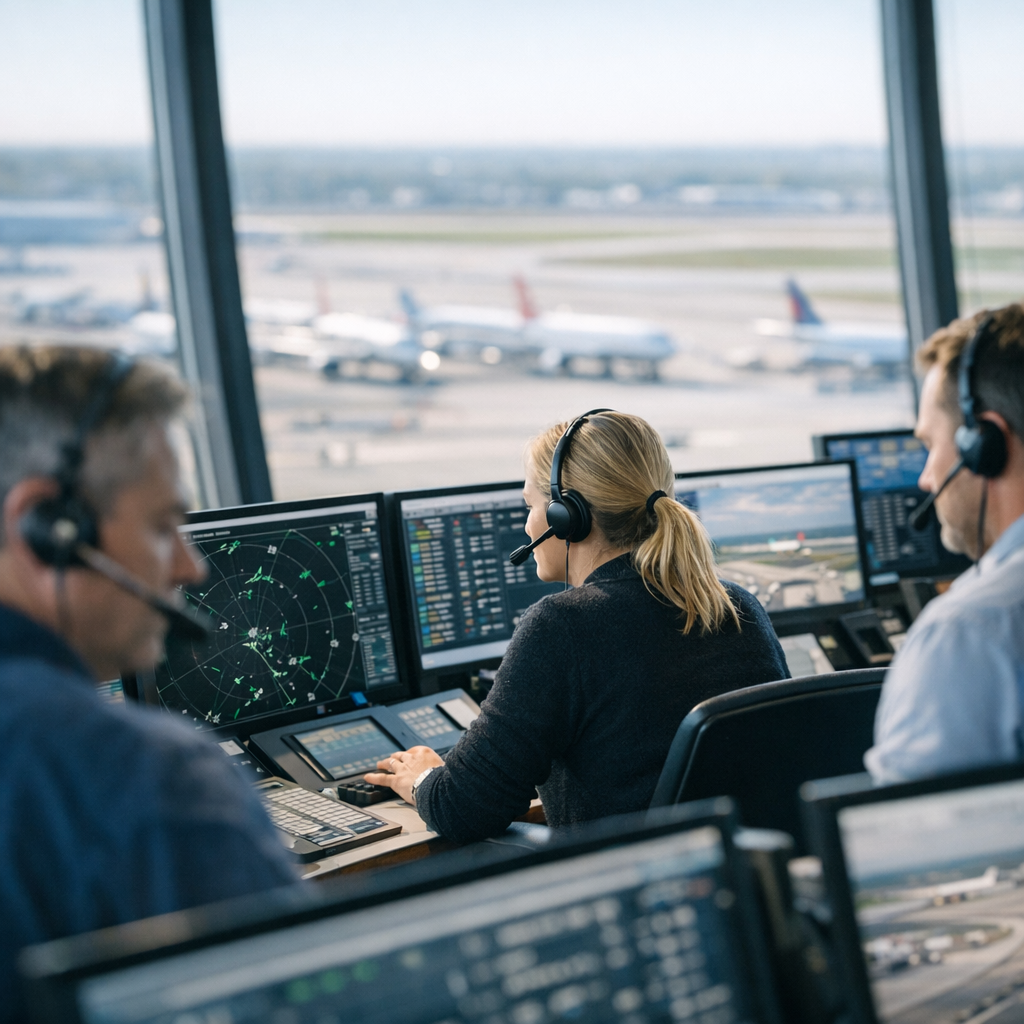
Air traffic controllers, a specialized and highly trained workforce, perform critical real-time decision-making. However, the current workforce demographics reveal an aging employee base with significant retirements expected in the coming decade. Combined with the complexity of integrating new technologies, this transition period will require substantial human capital investment in training and recruitment.
Technological Upgrades and Workforce Skill Evolution
The overhaul plans include deploying advanced automation, AI-assisted decision tools, and upgraded communication networks intended to increase system efficiency and safety. These technologies will change controller roles, requiring adaptation to human-machine coordination and decision support systems.
Consequently, the workforce will face several key challenges:
- Retraining and continuous learning: Controllers must acquire new technical skills for operating and interpreting AI-driven systems.
- Workforce expansion and diversity: To meet system demand and demographic shifts, hiring will expand, emphasizing inclusive recruitment to diversify this traditionally homogeneous workforce.
- Retention and job redesign: Organizational adjustments will need to address job satisfaction and ergonomics to retain skilled staff amidst evolving roles.
Implications for the Global Workforce Ecosystem
Beyond direct employment, the modernization impacts ancillary sectors such as aviation safety, logistics, and software development, highlighting the interconnected nature of workforce evolution in global air transportation.
Investments in workforce development could establish a model for upgrading other critical infrastructure sectors worldwide, where aging systems increasingly interface with emergent technologies.
Policy and Organizational Considerations
Implementing such a wide-scale workforce transformation amidst political debate requires strategic coordination between government agencies, labor unions, and educational institutions to align training programs with future job demands.
In the face of political pushback and funding uncertainties, sustaining momentum for workforce investment will be essential to avoid repeating operational failures and to realize the full benefits of modernization.
Conclusion
The $50 billion air traffic control modernization plan embodies a pivotal moment not just for technological innovation but for workforce transformation in a critical sector of the global economy. Ensuring that air traffic controllers and associated professionals can adapt effectively to new technologies and changing roles will be key to advancing safe, efficient, and resilient air travel worldwide.










No comments yet. Be the first!