

A structural shift in how universities deliver education
Higher education is undergoing a transformation driven by the integration of emerging technologies into academic environments. Artificial intelligence, immersive learning systems, and advanced data analytics are no longer experimental tools—they are becoming central components of how universities operate and deliver value.
Organizations such as UNESCO and the OECD have emphasized that digital transformation in education is accelerating globally, reshaping not only access to learning but also the nature of knowledge acquisition. Universities are shifting from content delivery models toward adaptive and skills-oriented systems.
How emerging technologies are redefining learning models
The integration of artificial intelligence allows for personalized learning pathways, where content adapts dynamically to student performance. This approach challenges traditional one-size-fits-all models and introduces a more efficient way to build competencies over time.
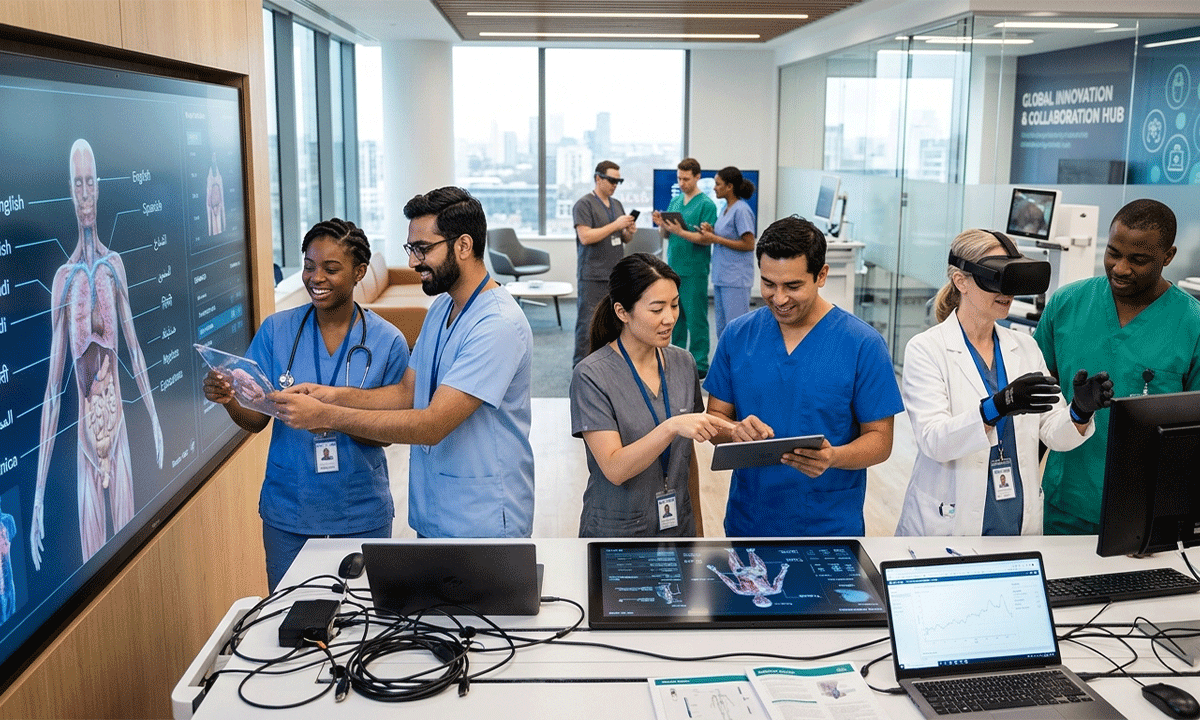
At the same time, immersive technologies such as virtual and augmented reality are enabling experiential learning environments. These tools are particularly relevant in fields that require simulation-based training, including healthcare, engineering, and business decision-making.
Implications for global workforce readiness
The adoption of these technologies is directly linked to how prepared graduates are for the global labor market. According to the World Economic Forum, demand for digital, analytical, and problem-solving skills continues to rise across industries, making technological literacy a baseline requirement rather than a specialization.
Universities that incorporate data-driven learning systems are producing graduates who are better equipped to navigate complex, technology-enabled work environments. This is particularly relevant in regions where cross-border collaboration and remote work are becoming standard practices.
Challenges institutions must address to remain relevant
Despite the progress, the adoption of emerging technologies presents structural challenges. Investment costs, faculty training, and digital infrastructure gaps remain significant barriers, especially in developing regions. The Inter-American Development Bank has highlighted that uneven access to technology can deepen educational inequality if not addressed strategically.
Additionally, institutions must balance technological innovation with academic rigor. The goal is not to replace traditional education models entirely, but to enhance them in ways that align with evolving workforce demands while maintaining quality standards.
A new direction for higher education systems worldwide
As emerging technologies continue to evolve, universities are likely to adopt more hybrid and flexible models that combine digital tools with in-person experiences. This shift reflects a broader redefinition of education as a continuous, lifelong process rather than a fixed stage.
Institutions that successfully integrate these technologies will not only enhance learning outcomes but also strengthen their role in shaping globally competitive professionals. In this context, technological adoption is not simply an innovation strategy—it is becoming a defining factor in the future of higher education.








No comments yet. Be the first!