
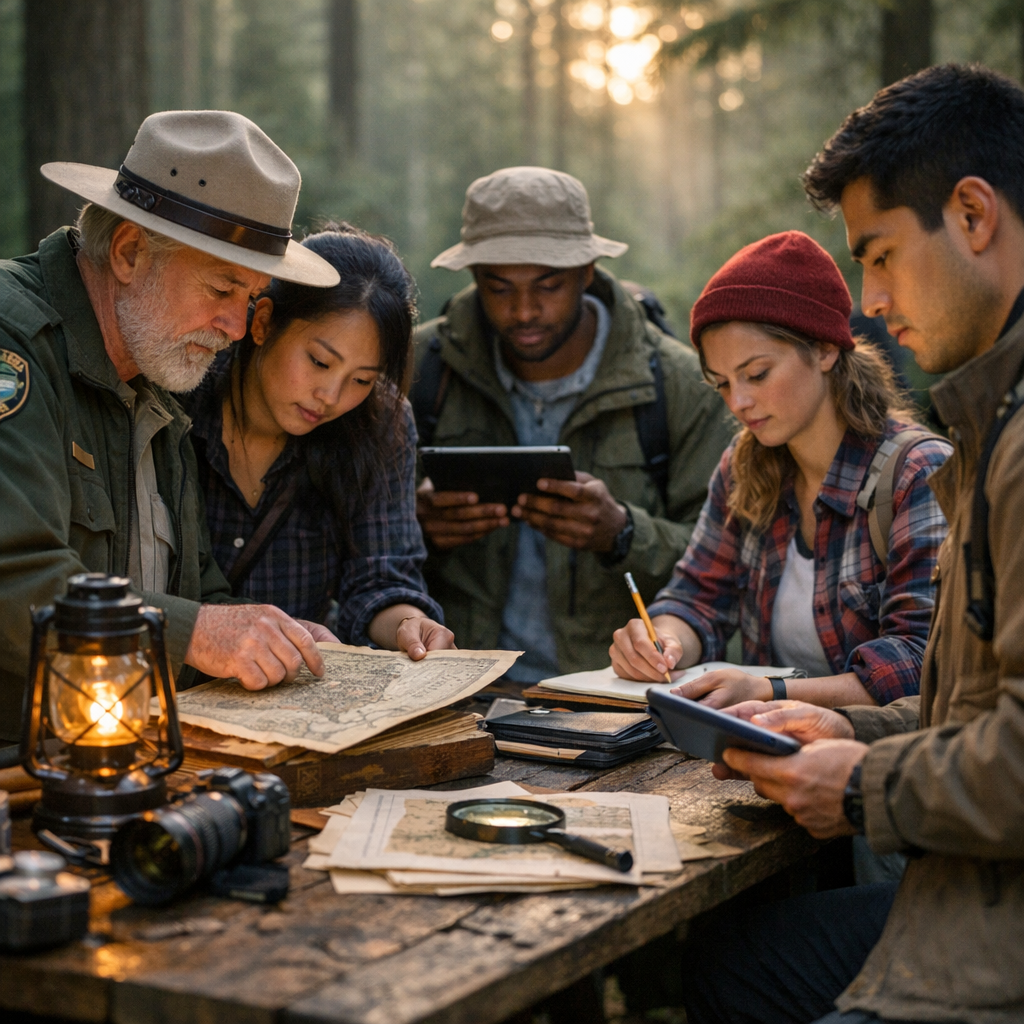
On November 21, 2026, the United States Department of Agriculture (USDA) made public a set of investigative files from 1982 concerning reports related to Bigfoot sightings, compiled by the Forest Service in Washington State. While these files center on folklore and cryptid investigation rather than conventional scientific inquiry, they invite a fresh perspective on educational innovation, particularly the role cultural narratives play in shaping curiosity, critical thinking, and interdisciplinary exploration within educational environments.
Connecting Mythology to Educational Engagement
Mythological and folkloric themes like Bigfoot have historically captured public imagination, acting as a lens for human curiosity. From an educational innovation standpoint, incorporating such cultural narratives into curricula and educational tools can promote enhanced engagement among learners across diverse age groups. These narratives function as a catalyst to develop critical thinking skills by encouraging learners to analyze evidence, evaluate sources, and distinguish between anecdotal and empirical information.
The 1982 USDA Bigfoot files offer a multidisciplinary case study bridging history, anthropology, environmental science, and media literacy. Their existence underscores the compelling need for educational frameworks that validate inquiry into diverse knowledge systems, including unofficial or marginalized perspectives. The files detail testimonies and observations from hunters and Forest Service personnel who experienced “chills running up and down our backs,” illustrating the emotional components that accompany encounters with the unknown — an element often underappreciated in traditional STEM learning paradigms.
Innovative Pedagogical Strategies Derived from Folklore Analysis
Educational institutions worldwide are increasingly embracing interdisciplinary models that integrate storytelling, cultural history, and science. The Bigfoot files exemplify several pathways for innovation:
- Critical Inquiry Modules: Using these files to teach students how to critically analyze primary source documents, understand bias, and evaluate the scientific rigor of investigations.
- Cross-Disciplinary Projects: Facilitating collaborative projects that combine ecology, anthropology, and media studies to contextualize folklore within regional environmental and sociocultural frameworks.
- Emotional Intelligence in Learning: Acknowledging and incorporating emotional responses to mysteries encourages affective learning, enhancing retention and curiosity.
- Digital Archiving and Open Access: Encouraging students to participate in digital humanities projects that digitize, analyze, and share such archives, developing tech fluency alongside historical analysis.
Impact on Workforce Preparation and Lifelong Learning
The intersection of folklore and scientific investigation as revealed in these USDA files illuminates broader implications for preparing a future-ready workforce. Critical thinking, media literacy, and interdisciplinary collaboration are essential competencies in the rapidly evolving global economy. By embedding such cultural investigations within educational innovation frameworks, institutions can develop resilient learners who are adept at navigating ambiguity, interpreting complex information, and devising creative solutions.
Conclusion
The release of the USDA Bigfoot files from 1982 transcends their original context as folklore investigations and becomes a springboard for innovative approaches in education. Leveraging cultural narratives, especially those wrapped in mystery and emotion, provides dynamic tools for fostering engagement, critical analysis, and interdisciplinarity in learning. In an era demanding adaptability and creativity, integrating folklore-based inquiry can redefine educational paradigms to better equip learners for the complexities of the future workforce.













No comments yet. Be the first!