
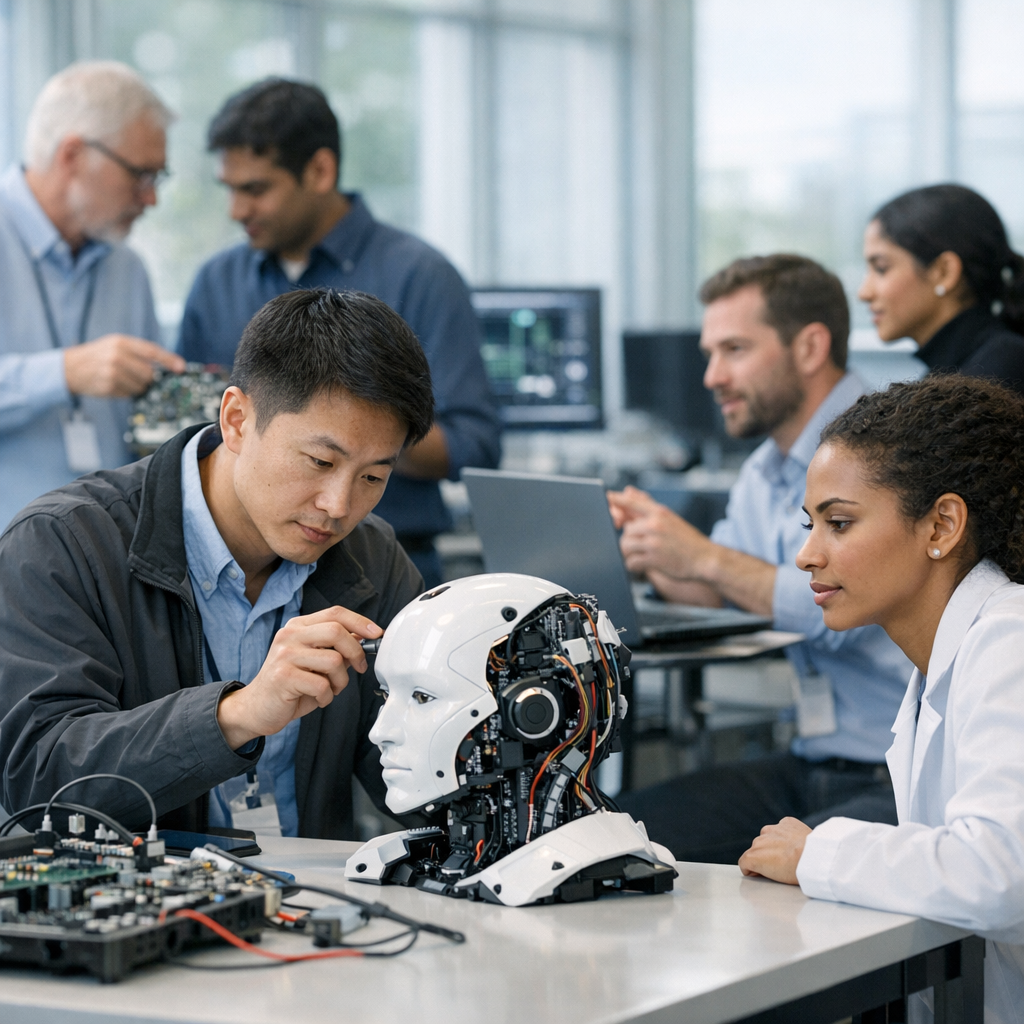
On November 24, 2026, the evolving synergy between artificial intelligence (AI) advancements and global market behavior highlights critical transformations in workforce dynamics. Industry frontrunners, particularly within the AI sector, are not only influencing stock market trends but also reshaping employment patterns and skill requirements on an international scale.
Technological Innovation Driving Market Shifts
Leaders in AI technology, with companies like Nvidia at the forefront, continue to push innovation boundaries that directly impact financial markets and labor forces. The integration of AI in diverse sectors introduces both opportunities and challenges by automating complex tasks and augmenting human productivity. These changes necessitate a workforce equipped with advanced digital competencies and adaptability.
Recent market fluctuations, prominently marked by shifts in tech stock valuations, reflect investor responses to breakthrough AI applications and leadership strategies. This environment stimulates a competitive push for talent proficient in AI, machine learning, and data analytics, intensifying demand globally.
Strategic Leadership and Workforce Adaptation
Executives spearheading technological enterprises are crucial in steering their organizations through this transformative phase. Their decisions influence not only corporate trajectories but also wider employment trends. Proactive workforce planning and investment in upskilling are imperative to meet the evolving requirements of AI-enhanced industries.
Experts emphasize the necessity for continuous education frameworks and reskilling initiatives to maintain labor market relevance. Employees must navigate an ecosystem where AI amplifies efficiency but also requires collaboration between human intelligence and automated systems.
Global Implications for Employment and Skills
The ripple effects of AI technological progress extend beyond local markets, compelling a reconceptualization of work worldwide. Key implications include:
- Increased demand for AI-literate professionals across sectors including manufacturing, finance, and services.
- Transformation of traditional roles as automation takes over repetitive tasks, pushing human roles towards strategic and creative functions.
- Need for inclusive policies to manage workforce transitions and mitigate displacement risks, ensuring equitable access to emerging job opportunities.
- Acceleration of digital infrastructure development to support AI-driven operations on a global scale.
These factors underscore the importance of aligning education systems and labor policies with technological trajectories to foster a resilient and future-ready workforce.
Conclusion
The ongoing integration of AI into core economic sectors, represented by leaders in technology and evident in market responses, signals a pivotal moment for the global workforce. Embracing this transition demands comprehensive strategies combining innovation, education, and policy reforms to harness AI's potential while safeguarding inclusive employment growth. As we advance through 2026, the interplay between AI and human capital will define competitive advantage on the world stage.








No comments yet. Be the first!