
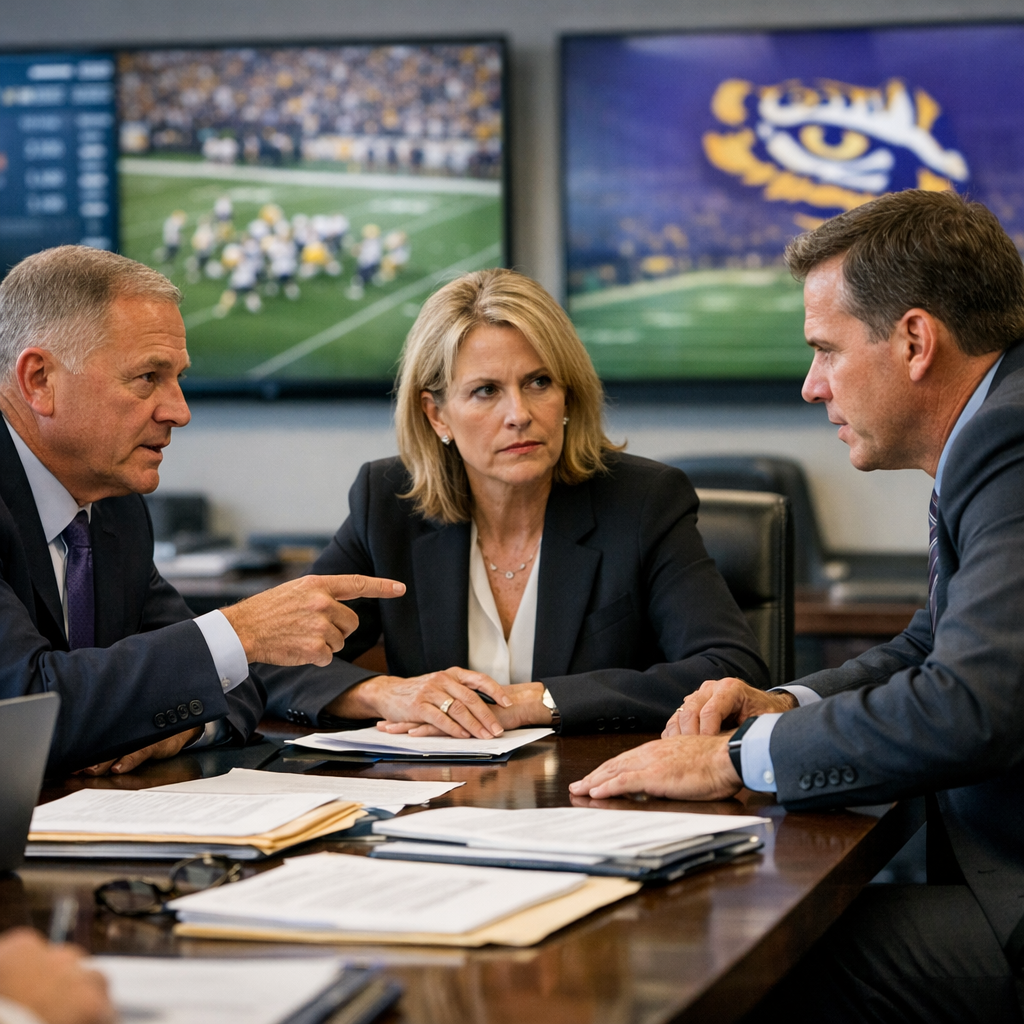
On November 24, 2026, tensions between the Southeastern Conference (SEC) and Louisiana State University (LSU) have escalated to unprecedented levels following LSU's recent legal maneuvers aimed at renegotiating conference commitments. These developments not only threaten the collegiate sports landscape but also raise critical questions about workforce dynamics and organizational resilience within large athletic institutions.
Contextualizing the Dispute in Workforce Terms
The SEC’s threat to "terminate" LSU's membership after the university’s legal actions underscores complex challenges in managing labor relations amid shifting institutional priorities. Universities and athletic conferences function as intricate ecosystems relying on a blend of athletes, coaching staff, administrators, and support personnel. Disruptions at the governance level cascade into uncertainties affecting talent retention, morale, and recruitment across all levels.
LSU's pursuit of greater autonomy and renegotiated terms illustrates a growing trend where institutions assert workforce agency in an increasingly competitive athletic marketplace. This rebellion exemplifies the tension between centralized governance and localized workforce empowerment, prompting stakeholders to reconsider contract frameworks and collaborative governance models.
Impacts on Talent Management and Workforce Stability
The conflict signals potential ramifications in how collegiate programs attract and maintain high-caliber talent, including both athletes and coaching professionals. Uncertainties regarding conference alignment may lead to:
- Increased attrition risk among coaching staff who seek stable and competitive environments.
- Heightened challenges in athlete recruitment due to perceived institutional instability.
- Disruptions in ongoing development programs affecting support staff and athletic trainers.
Moreover, the legal confrontation reflects the broader strain on human capital where contractual disputes and governance clashes impose operational risks, demanding adaptive leadership and sophisticated negotiation capabilities.
Governance, Labor Relations, and the Future of Collegiate Workforce
This situation offers a case study on how evolving labor relations within sports organizations necessitate more agile governance structures. The SEC-LSU discord highlights:
- The criticality of transparent communication channels between governing bodies and workforce constituents.
- The need for flexible contractual frameworks that accommodate institutional ambitions and preserve workforce engagement.
- The importance of balancing strategic institutional goals with workforce well-being to sustain long-term operational success.
These dynamics extend beyond collegiate sports into other sectors where workforce cohesion is threatened by governance disputes, signaling a universal challenge in the future of work.
Strategic Lessons for Global Workforce Management
The unfolding events within the SEC and LSU context inform several strategic imperatives for workforce leaders globally:
- Anticipate and proactively manage conflict scenarios to preserve organizational integrity.
- Invest in leadership development programs to equip managers with negotiation and conflict resolution skills.
- Enhance adaptability in workforce policies to respond rapidly to shifting institutional agendas.
- Foster an inclusive culture that aligns diverse workforce interests with organizational goals.
For the global workforce operating in rapidly evolving sectors, these insights offer a roadmap to bolstering resilience and sustaining competitive advantage amid uncertainty.
Conclusion
The SEC-LSU legal dispute serves as a contemporary illustration of the complex interplay between governance, labor relations, and workforce management within high-profile organizations. As collegiate sports organizations navigate this crisis, the lessons extend far beyond athletics, providing valuable insights for managing talent and institutional stability in dynamic global work environments. Understanding and addressing these multifaceted workforce challenges will be pivotal to fostering sustainable organizational success in the future.









No comments yet. Be the first!