
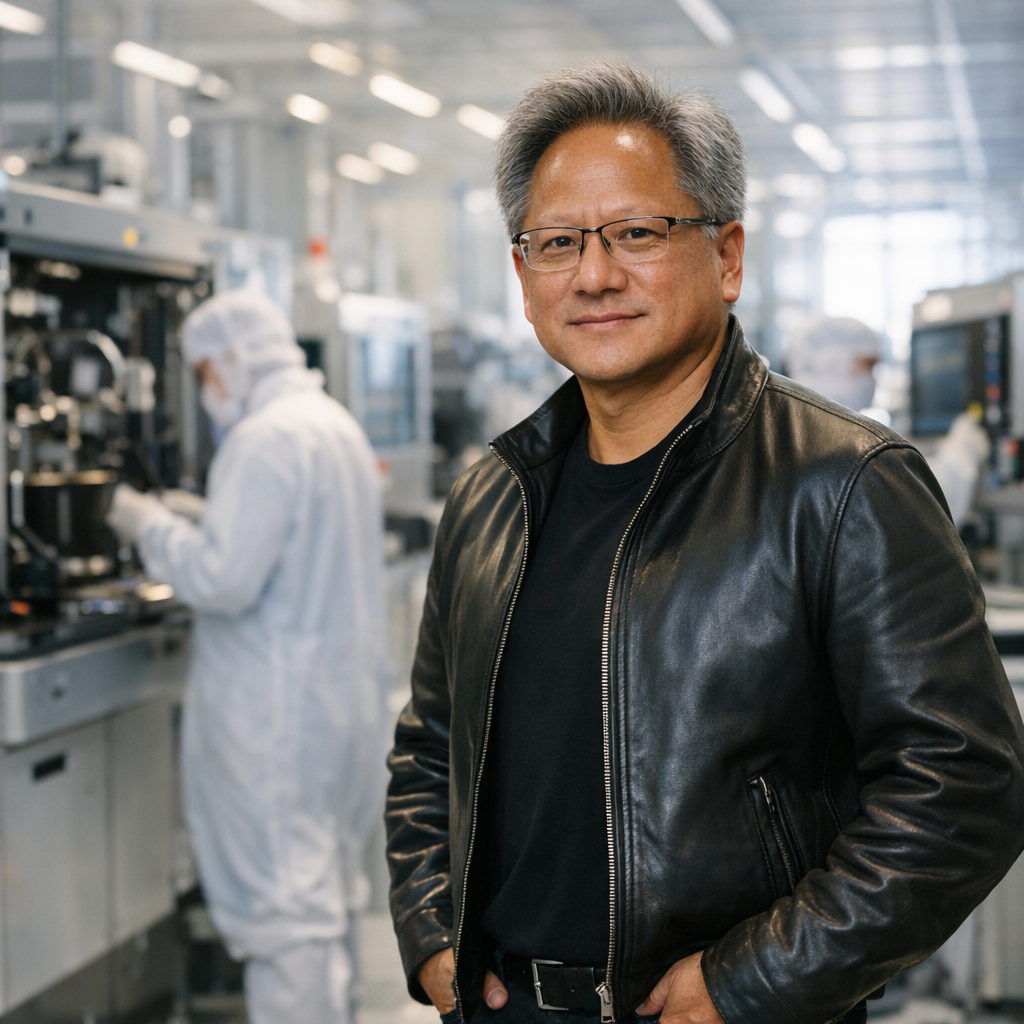
On November 23, 2026, Nvidia Corporation, a leading global technology powerhouse in artificial intelligence and semiconductor manufacturing, announced the reinstatement of its co-founder and CEO Jensen Huang following a comprehensive national security review.
This decision marks the end of a period of uncertainty for Nvidia’s leadership, reaffirming the company’s pivotal role within the rapidly evolving global technology landscape. Huang’s continued leadership is poised to influence not only Nvidia’s corporate trajectory but also broader trends in workforce transformation across the tech industry.
Strategic Leadership and Workforce Stability
The reinstatement signals a restoration of confidence in Nvidia’s strategic vision, especially amid surging demand for advanced AI chips and computing solutions. As AI technologies become foundational to an array of sectors — from autonomous vehicles to healthcare diagnostics — Nvidia’s role as a hardware innovator directly impacts global talent ecosystems.
Under Huang’s leadership, Nvidia has championed innovation that demands a highly skilled, adaptive workforce capable of navigating complex AI and semiconductor development cycles. The continuity provided by his reinstatement likely ensures:
- Stability in workforce planning and retention strategies globally
- Acceleration in initiatives for upskilling and reskilling employees to meet future tech demands
- Enhanced collaboration between Nvidia and academic institutions to cultivate AI-centric education pipelines
Impact on Global Talent Acquisition and Development
Nvidia’s CEO reinstatement resonates beyond the corporate hierarchy, influencing global labor markets and education systems. As one of the central players in AI hardware, Nvidia drives demand for talent proficient in areas such as high-performance computing, machine learning engineering, and advanced chip design.
Workforce dynamics emerging from this context include:
- Heightened competition among tech companies for elite AI specialists and engineers
- Increased investment in STEM education programs worldwide to build future-ready talent pools
- Creation of new cross-border collaboration opportunities between tech firms and educational institutions to foster innovation-driven skill development
Broader Implications for the Future of Work
The decision to reaffirm Huang’s leadership also underscores the geopolitical and economic sensitivities entwined with the global tech workforce. Nvidia’s innovations shape automation trends and AI applications that redefine job roles across industries.
From a workforce perspective, this scenario entails:
- Continued evolution of hybrid human-AI work environments that require advanced digital literacy and adaptability
- The imperative for lifelong learning models to accommodate fast-paced technological change
- A spotlight on ethical AI deployment and its consequences for employees in affected sectors
In conclusion, Jensen Huang’s reinstatement as Nvidia’s CEO represents more than an executive update; it is a catalyst for reshaping global workforce strategy within the expanding AI ecosystem.
Conclusion
The reaffirmation of Jensen Huang's role as Nvidia’s CEO after navigating a stringent national security review will significantly influence the trajectory of global workforce development. Nvidia continues to set standards in AI-driven innovation, demanding a corresponding evolution in talent acquisition, educational partnerships, and workforce adaptability. As industries worldwide leverage Nvidia’s technologies, the future of work will increasingly center on cultivating sophisticated skill sets and embracing collaborative learning models. This event highlights the intertwined nature of corporate leadership stability and the dynamism required for global workforce transformation in the AI era.











No comments yet. Be the first!