
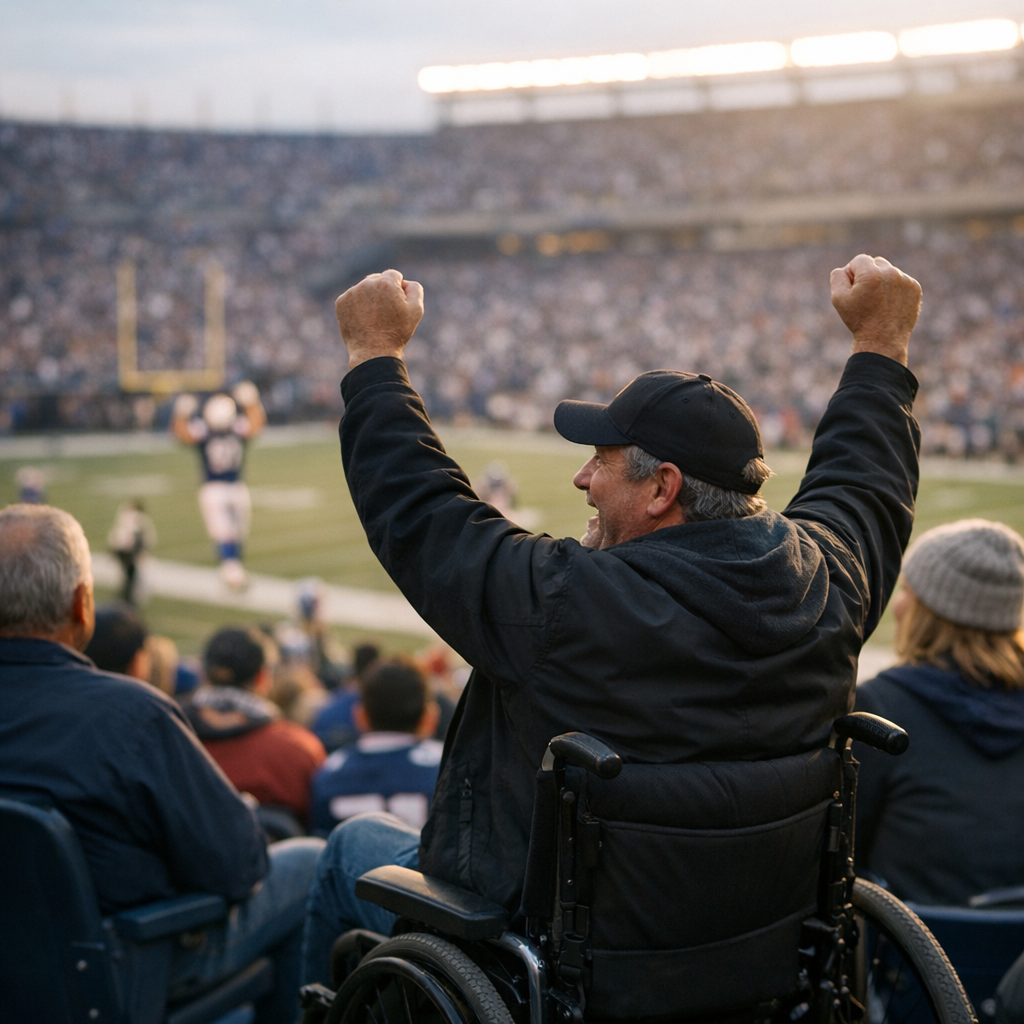
The recent heartfelt moment involving a mother battling multiple sclerosis (MS) watching her son score his first touchdown in the National Football League (NFL) exemplifies the profound impact of community support on individual inclusion and lifelong learning. On November 15, 2026, during an NFL game, Fernando Mendoza scored a critical touchdown for the Las Vegas Raiders, an achievement elevated by the crowd's selfless action that allowed his mother, wheelchair-bound due to MS, to fully experience the celebration. This compelling episode transcends sports, illuminating vital lessons on empathy, accessibility, and continuous learning in diverse environments.
Community Empathy as a Catalyst for Inclusion
At its core, this narrative spotlights how collective awareness and action can foster environments where individuals facing physical challenges feel valued and included. When thousands of Raiders fans remained seated to allow Mendoza's mother to watch him celebrate unrestricted, the act underscored a social dynamic essential to lifelong learning: fostering empathy within communities.
Developing empathy is critical in educational and workplace settings alike, where recognizing diverse needs transforms how knowledge and skills are conveyed and acquired. It also reflects inclusive strategies promoting participation regardless of physical or cognitive limits.
Accessibility and Lifelong Learning
This event further highlights accessibility as a pillar of continuous personal and professional development. Learning does not cease in classrooms; it unfolds throughout life and across contexts, including the symbolic lessons drawn from shared experiences.
Inclusive spaces, both physical and digital, empower individuals to remain engaged learners despite challenges. In education and workforce sectors, designing environments that accommodate disabilities fosters independence and skill enhancement, allowing people like Mendoza's mother to stay connected with families, careers, and communities.
Implications for Global Educational and Workforce Practices
This story invites reflection on integrating lifelong learning principles into broader societal practices. Key aspects include:
- Promoting empathy-driven learning: Embedding emotional intelligence and social awareness in curricula cultivates inclusive mindsets from early education onward.
- Enhancing physical and virtual accessibility: Investing in adaptive technologies and infrastructure ensures equitable participation for all learners and workers.
- Supporting caregivers and families: Recognizing family dynamics as part of lifelong learning ecosystems encourages policies that accommodate diverse life circumstances.
- Encouraging community engagement: Empowering communities to support members facing disabilities enhances social capital and continuous development opportunities.
These elements align with global efforts to build resilient, skillful populations capable of navigating rapid technological and social change.
Conclusion
The touching scene of a crowd uniting to honor a young athlete’s family moment symbolizes much more than sportsmanship—it represents a microcosm of inclusive lifelong learning values. Embracing empathy, accessibility, and community involvement fosters environments where learning can thrive across all stages of life and abilities. As societies worldwide confront evolving educational and workforce demands, these principles remain essential to ensuring everyone can engage fully and meaningfully in their personal and professional journeys.











No comments yet. Be the first!