
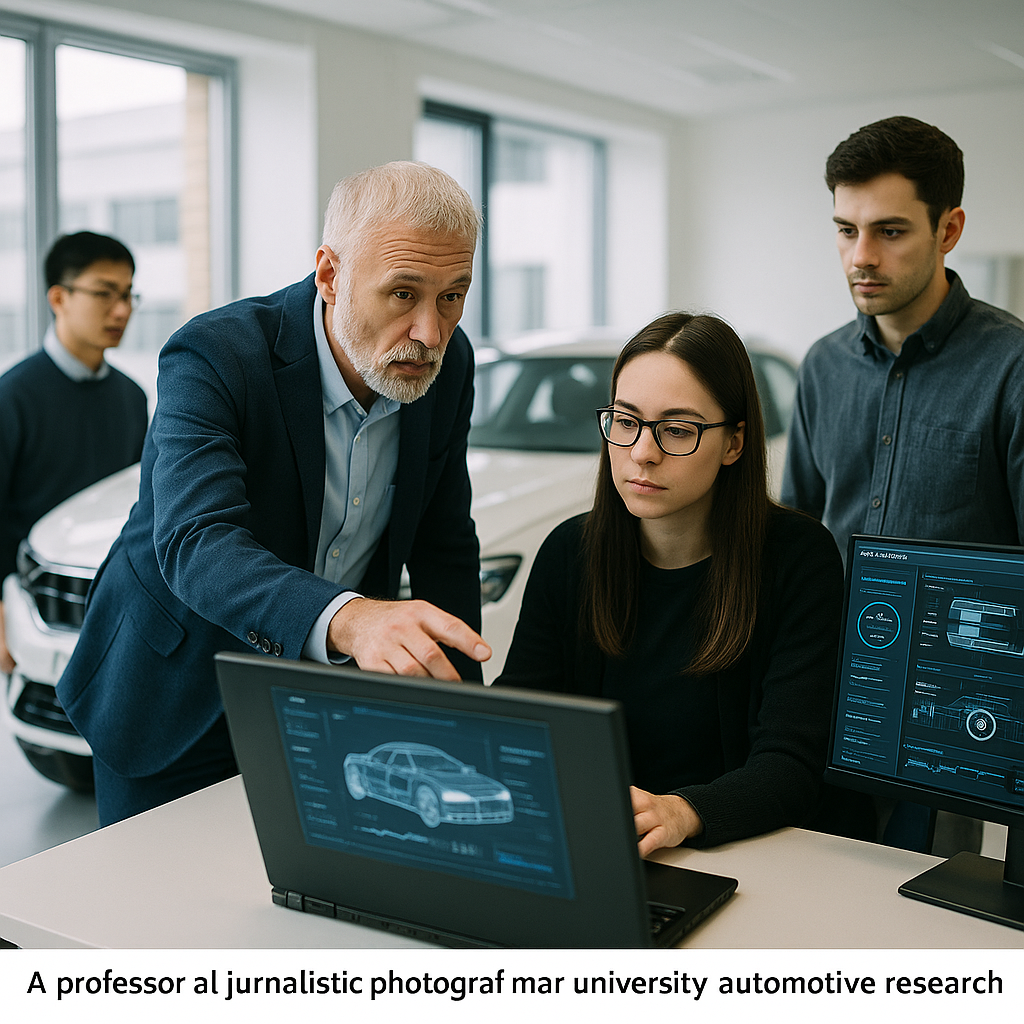
On October 6, 2026, investigative reports have surfaced revealing the pivotal role that expertise from prominent United States university professors played in shaping advanced automotive technologies used in China’s expansive vehicle surveillance network.
This emerging information sheds light on the complex intersections of international academic research and its unintended applications within state-of-the-art surveillance infrastructures. The involvement of American scholars raises pressing questions about the ethical responsibilities and oversight mechanisms within higher education, especially concerning dual-use technologies.
Academic Contributions to Vehicle Surveillance Tech
According to the report, several professors specializing in automotive engineering, computer science, and artificial intelligence at major US research universities contributed foundational research that was later adapted to enhance the capabilities of Chinese automotive tracking and spying systems.
The work primarily involved:
- Development of advanced vehicular communication protocols enabling real-time data exchange.
- Innovations in sensor integration for high-precision location tracking.
- Algorithmic advancements in artificial intelligence that improved pattern recognition within traffic monitoring networks.
These scientific contributions, meant to fuel progress in autonomous vehicle technologies and smart transportation, have been repurposed in ways that extend beyond their original academic intentions.
Implications for Higher Education
This revelation underscores a critical need for institutions to re-evaluate policies governing research collaborations and intellectual property, particularly when research has potential geopolitical consequences.
Higher education institutions are being challenged to:
- Strengthen transparency in international research partnerships.
- Enhance ethical training for faculty and graduate researchers regarding dual-use technology.
- Implement monitoring frameworks that assess the long-term impacts of academic outputs.
The involvement of respected academic professionals in these developments signals the urgency for universities to balance innovation with social responsibility more diligently in an increasingly interconnected global landscape.
Broader Educational and Technological Context
The case exemplifies the complexities that arise at the nexus of cutting-edge research and global technological competition. As the automotive sector rapidly advances towards full autonomy and smart infrastructures, research institutions form the backbone of innovation but must navigate the fine line between knowledge advancement and ethical application.
Experts advocate for a proactive approach within the academic community to anticipate and mitigate potential misuse of emerging technologies through:
- Curricular integration of ethical foresight in STEM programs.
- Encouragement of interdisciplinary studies combining technology with policy analysis.
- Fostering global dialogue on responsible innovation practices.
Conclusion
The unfolding scenario involving US academic contributions to China's surveillance vehicle technology underlines a pivotal challenge for global higher education: how to nurture innovation while safeguarding ethical standards and societal well-being. Universities must strengthen governance frameworks to ensure that scholarly work serves as a force for positive and transparent technological progress in a complex international environment.












No comments yet. Be the first!